Factory Showcase
Engineered Extension Sockets & Surge Protectors
Precision-molded desktop power sockets, vertical tower strips, and multi-protocol high-wattage charging units tested for global market distribution.
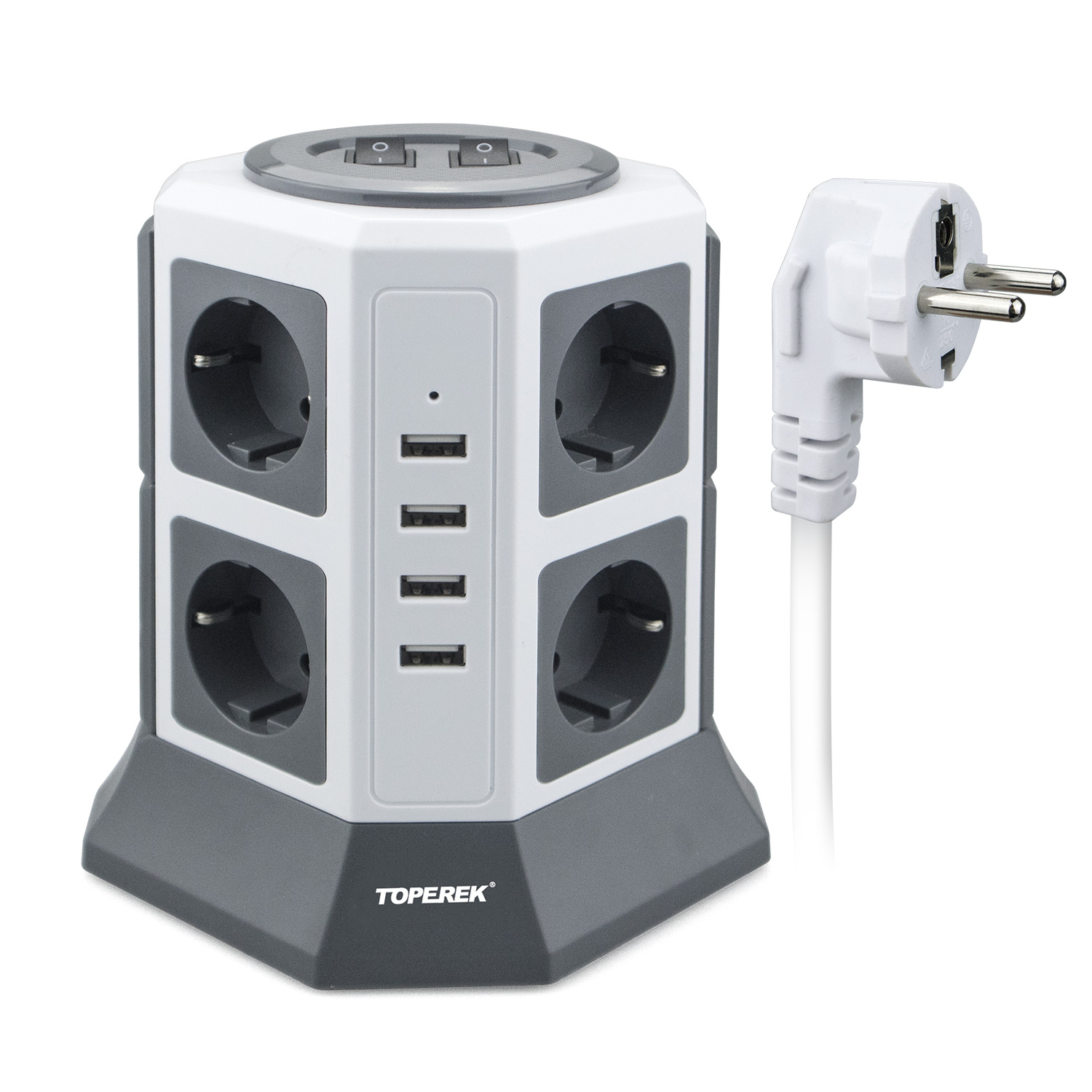
Europe Standard 8 Outlets 4 USB Ports 16A Fire Retardant Extension Socket Vertical Tower
CE / Schuko Type F · 4000W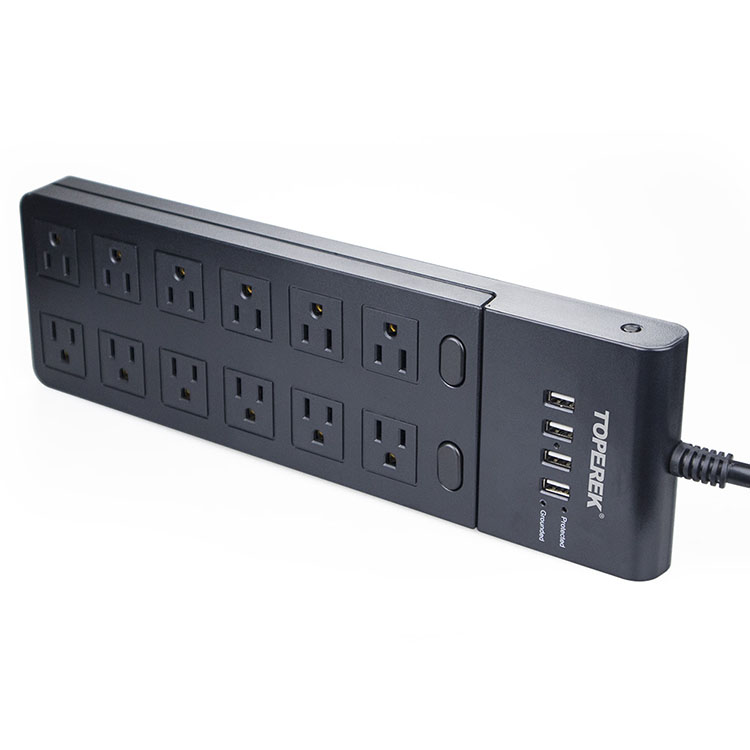
TOPEREK US Plug with Socket 12 Outlets 4 USB Ports 110-125V ABS+PC Fire Retardant
Overload Protection · 15A Max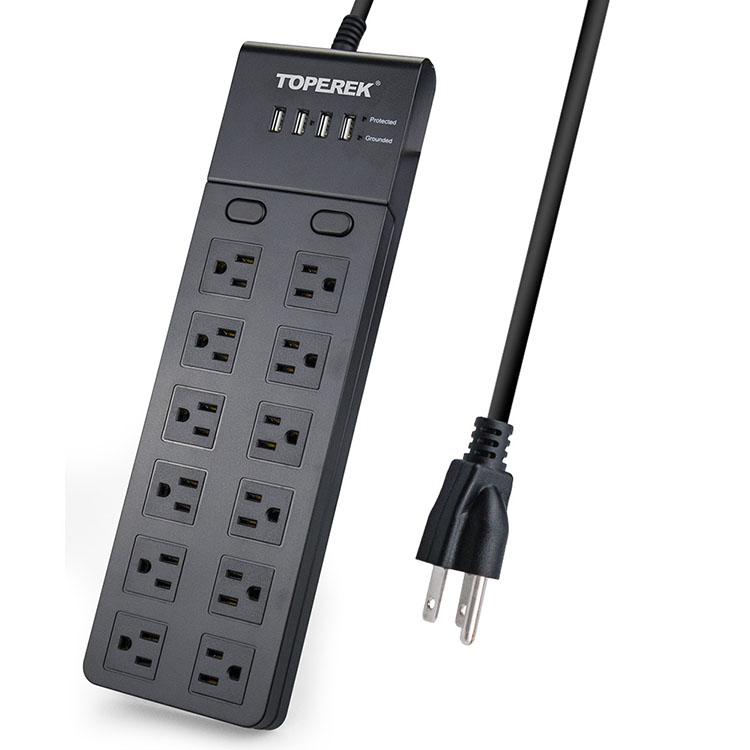
USA Standard Flat Multi-outlet Surge Protector Extension Socket 12 Outlets 4 USB
Surge Suppression · 2m Pure Copper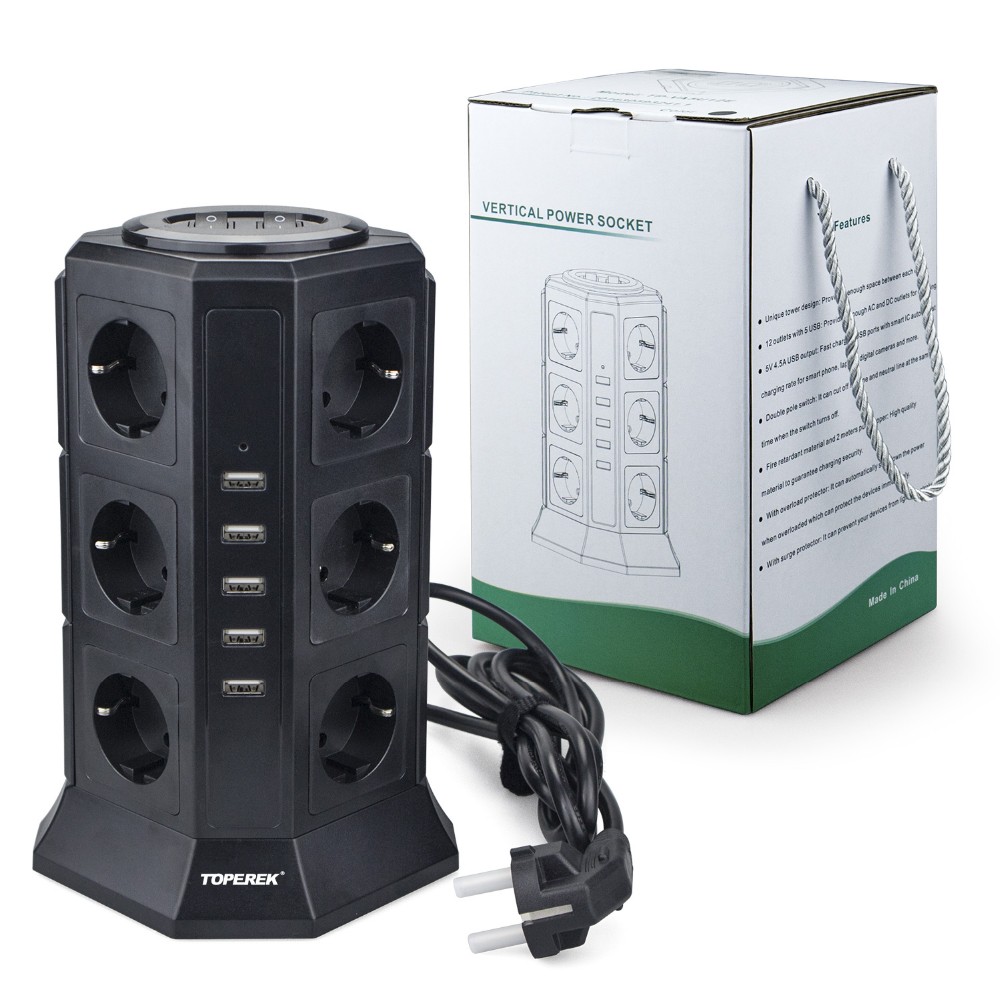
16A 4000W Tower Extension Socket 12 EU Outlets 5 USB Ports 220-250V Vertical Strip
Heavy-Duty 16A · Independent Tier Control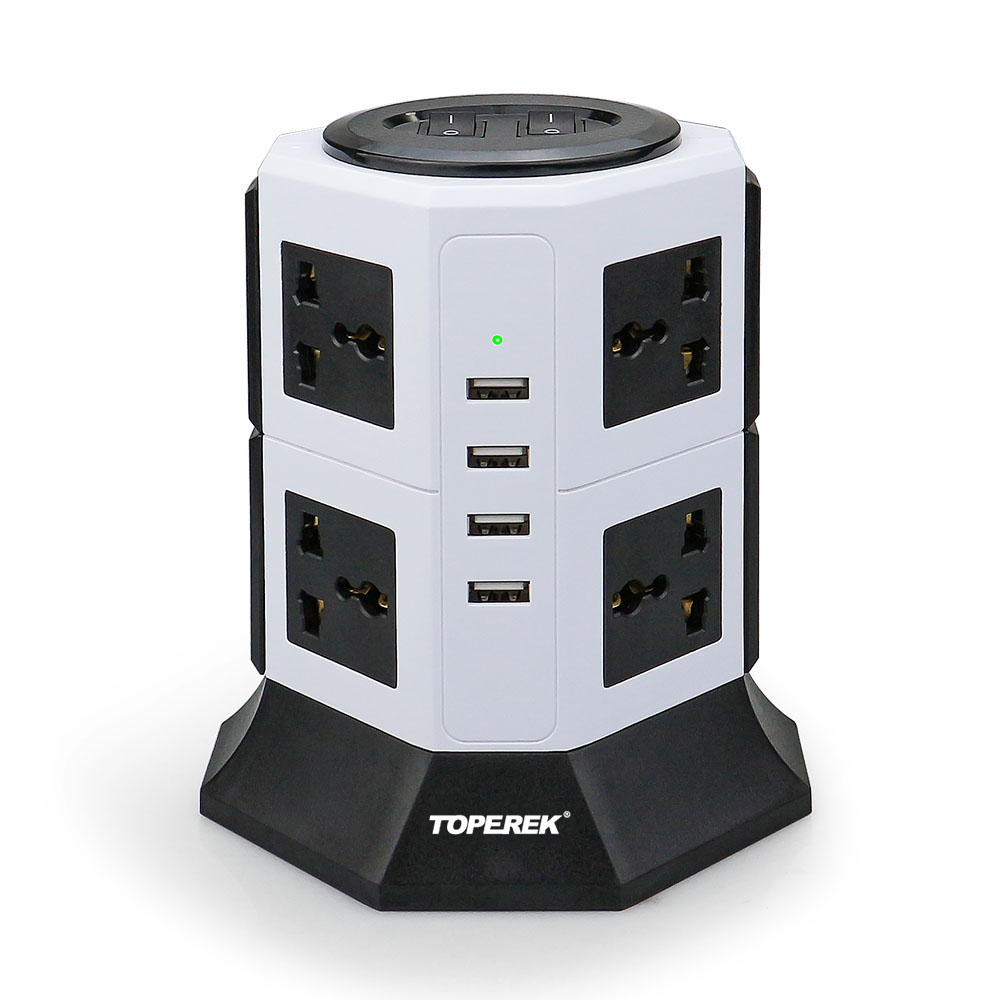
Universal Power Socket Tower Multi-Standard USB Charging Extension Socket
Multi-National Outlets · Smart IC USB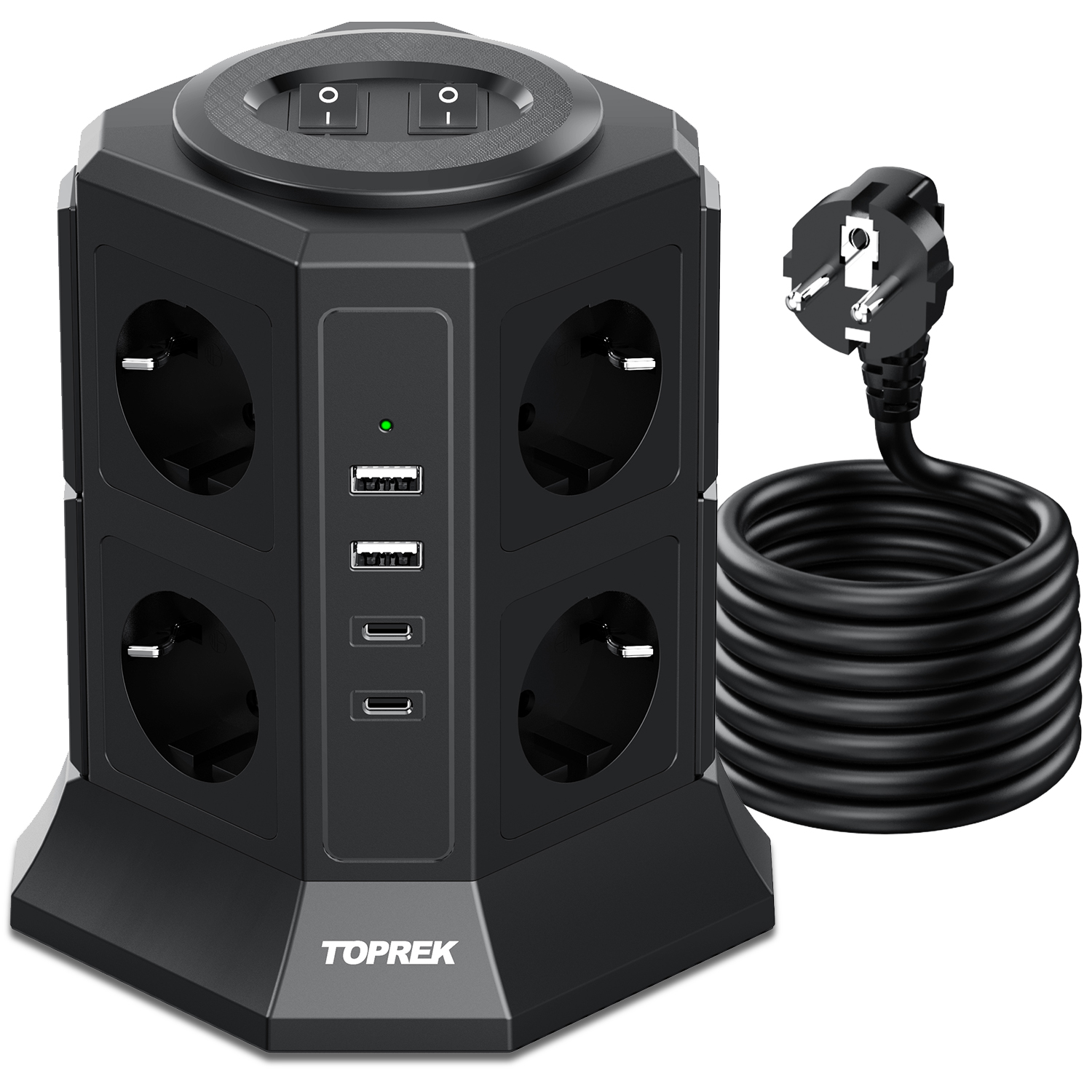
Fast Charging EU Standard 8 Outlets 2 USB-A + 2 USB-C Extension Socket Bipolar Switch
Type-C PD Delivery · Bipolar Safety Switch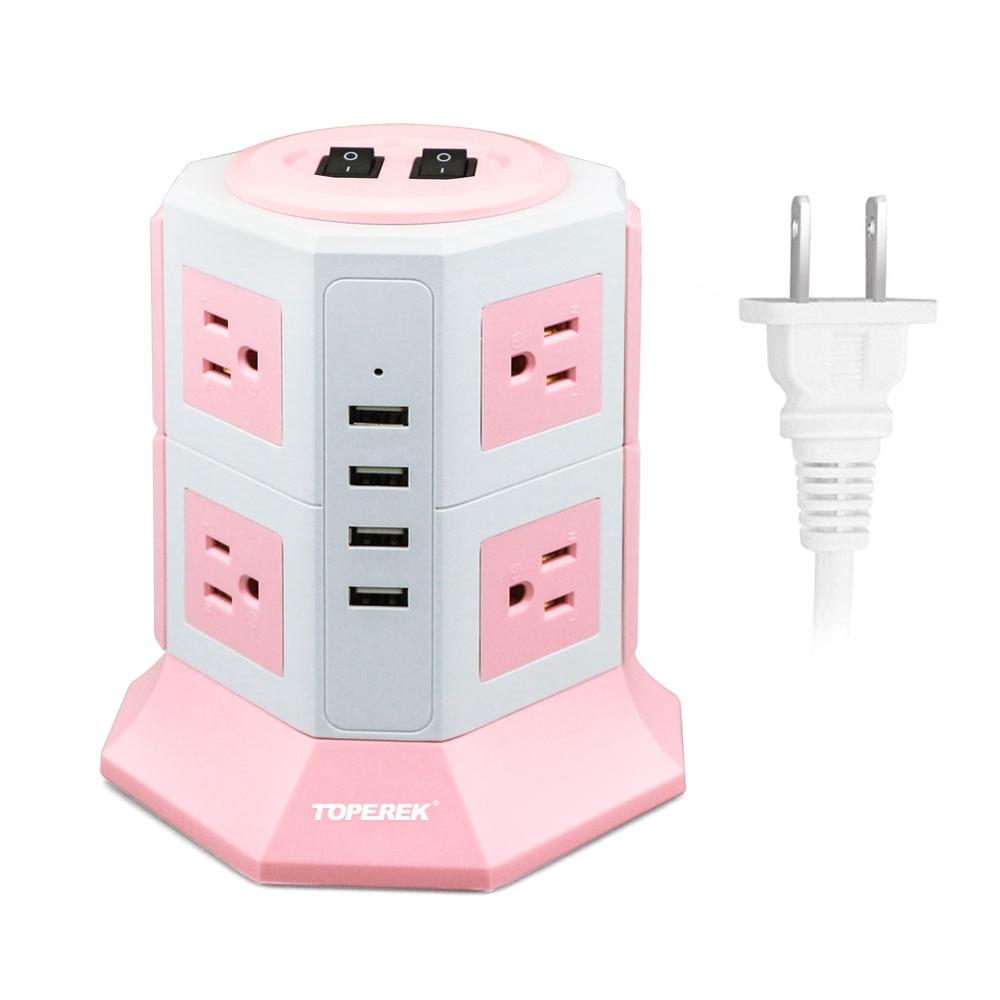
Japanese Standard Vertical Socket 4 USB Charging Ports Power Electrical Strip
PSE Compliance · 100V 15A Compact Profile12+ Years
Engineering Heritage (Since 2013)
11,600 m²
TÜV-Verified Facility Area
340+
Specialized Production Staff
US$ 5.8M+
Annual Global Export Volume
The B2B Strategic Buyer’s Guide: Evaluating Tier-1 Power Strip Exporters
As consumer electronics escalate in power consumption and micro-workstations demand high-density desktop connectivity, electrical extension strips have shifted from passive splitters to active power management devices. Procuring from top-tier extension power strip factories requires evaluating more than raw FOB price. International compliance (UL, CE, UKCA, PSE), raw material heat dissipation thresholds, and internal structural integration dictate product safety and market survivability.
Top global exporters maintain strict in-house vertical integration. Sourcing failures generally occur when brand buyers import products assembled by downstream brokers who outsource tooling, SMT surface-mounting, and cable extrusions across unmonitored sub-tier workshops. Tier-1 manufacturers consolidate tooling, high-precision injection molding, automated surface mount technology (SMT), PCBA quality checks, and end-of-line high-potential testing within a single audited campus.
| Evaluation Parameter | Tier-1 Factory Standard (e.g., Laxvi Ecosystem) | Commodity / Downstream Assembler |
|---|---|---|
| Housing Flame Retardancy | 750°C Glow-Wire Tested, UL94 V-0 flame-retardant PC/ABS alloy | Recycled ABS, prone to softening at elevated ambient temps |
| Internal Conductor | Integrated phosphor bronze strip stamping; zero point-to-point solder jumps | Pieced copper wiring with manual soldered wire junctions |
| High-Voltage Safety | 100% In-line Hi-Pot (Withstand Voltage) dielectric barrier verification | Spot batch sampling or visual inspection only |
| Fast Charging Tech | Integrated GaN (Gallium Nitride) smart ICs, PD3.0/QC4.0+ up to 100W | Linear transformer modules, low-efficiency 5V/2.4A buck converters |
| Facility Transparency | Onsite audited by TÜV Rheinland; open cleanroom SMT & aging chambers | Uncertified commercial trading entities without traceable workshops |
Procurement Intelligence
Future Sourcing Trends in Electrical Extension Systems
Crucial engineering transformations shaping institutional procurement, enterprise distribution, and retail branding over the next 24 to 36 months.
⚡
High-Wattage GaN Integration
Commercial users are eliminating discrete AC-DC power adapters. The future of office and residential power strips lies in embedded Gallium Nitride (GaN) power modules capable of delivering 65W to 140W USB-C Power Delivery directly from the power strip fascia, powering laptops while keeping thermal envelopes minimized.
Key Spec: PD 3.1 Extended Power Range🛡️
Multi-Stage Transient Voltage Suppression
Basic Metal Oxide Varistors (MOVs) are being phased out in enterprise contracts. Importers require multi-stage surge suppression featuring thermal fuses that safely disconnect the circuit during catastrophic over-voltage events, accompanied by bipolar switches and optical LED system diagnostics.
Key Spec: 1050J to 4000J MOV Arrays🌿
Eco-Responsible Circular Materials
Cross-border legislation in Europe (such as EPR directives and RoHS updates) requires manufacturers to utilize Post-Consumer Recycled (PCR) polycarbonate while maintaining stringent UL94 V-0 flame retardancy. Sourcing pipelines will favor manufacturers holding accredited life-cycle carbon footprints and zero halogen resins.
Key Spec: PCR-Polycarbonate with V-0 Flame Index
Product Evolution
Next-Gen Form Factors & Industrial Design Architecture
How the physical topology of power distribution is adapting to modern ergonomics and aesthetic workplace requirements.
🗼
Vertical Multi-Tier Towers
Tower structures drastically decrease horizontal footprint by up to 60%, isolating bulky AC transformers on separate facets while organizing workstation cable clutter with dedicated multi-tier mechanical switching.
🧊
Modular Cube Topology
Cube power strips solve the perennial problem of transformer plug blockage. Featuring 5-sided plug accessibility, internal busbar distribution, and optional desk clamp brackets, cubes represent one of the fastest growing retail categories globally.
🪵
Architectural Materials & Finishes
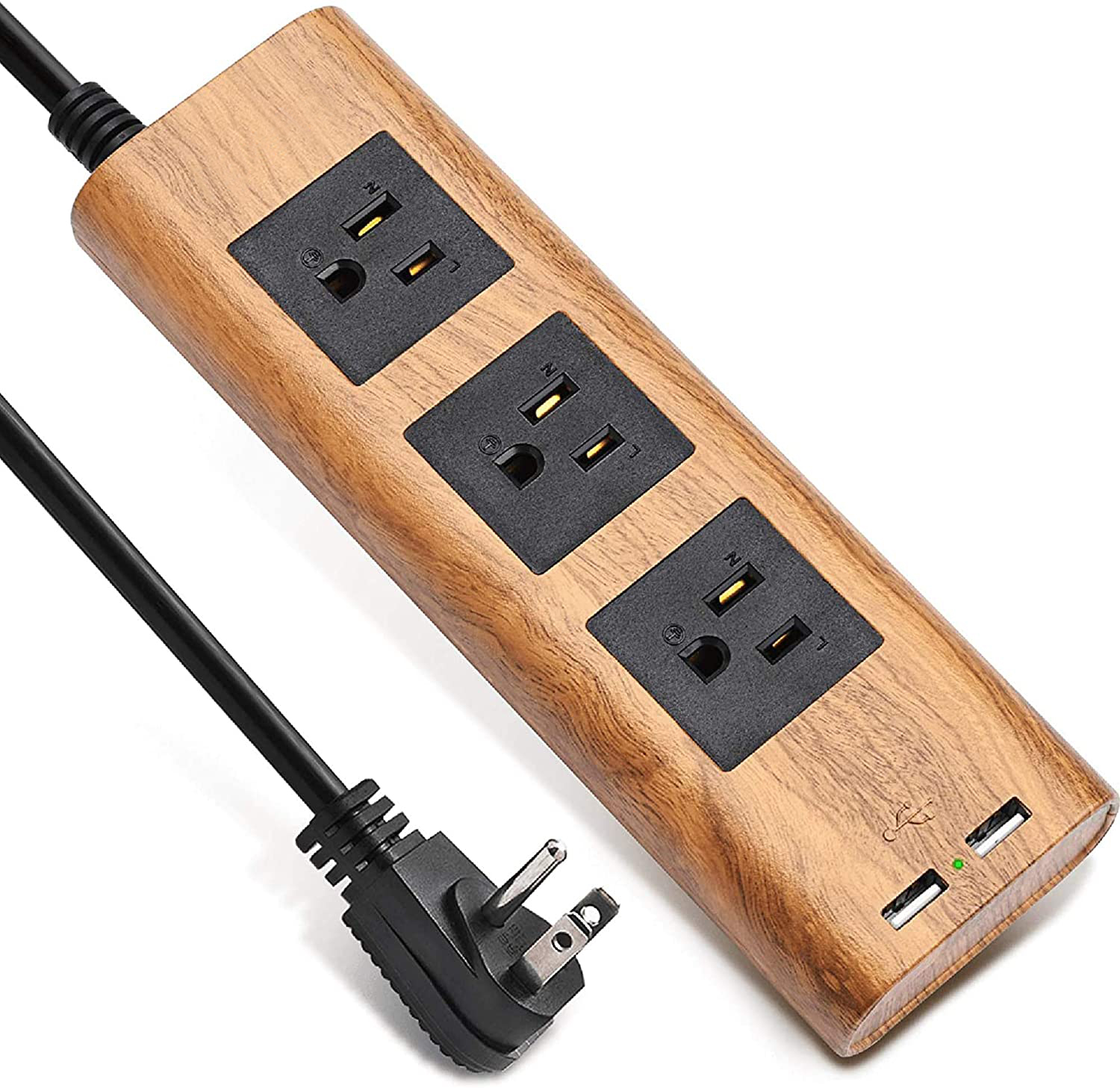
Standard white industrial plastics are losing traction in high-end lifestyle electronics. Water-transfer wood grain, matte anodized aluminum chassis, and dual-tone textures seamlessly integrate electrical appliances into premium interior design spaces.
📡
IoT-Connected Micro-Meters
Enterprise power strips increasingly adopt Matter-over-Thread and Wi-Fi energy monitoring chips. Real-time kilowatt-hour logging, independent outlet scheduling, and autonomous leakage shutdown convert basic strips into proactive smart nodes.
Why Choose Us
End-to-End OEM/ODM Manufacturing Advantages
Operational control spanning precision tooling, surface-mount electronics, and automated assembly in Shenzhen.
Full In-House Tooling & Mold Making
Equipped with state-of-the-art CNC machining, EDM wire cutting, and milling lines, Laxvi designs, engineers, and fabricates proprietary molds internally. This eliminates third-party delays, ensuring custom prototype validation within weeks.
Precision SMT & Automated PCBA
Our surface mount technology lines and automated soldering furnaces assemble advanced smart fast-charging circuits with optical AOI verification, keeping failure rates beneath 0.05% across mass production batches.
On-Site Testing Lab & TÜV Verification
Independent testing capabilities including Glow-Wire chambers, switch life endurance rigs, smart load burn-in cabinets, and salt-spray corrosion chambers allow buyers to obtain factory-direct compliance reports before container dispatch.
Knowledge Base
B2B Power Strip Procurement FAQ
Direct technical answers addressing critical factory certifications, customized molding, and international regulatory barriers.
Which national outlet standards can your manufacturing lines support?
Our production facilities support dedicated and hybrid configurations for North American NEMA (Type A/B), European Schuko (Type C/F), British BS1363 (Type G), Australian AS/NZS 3112 (Type I), Italian CEI 23-50 (Type L), and Japanese JIS C 8303 (Type A/B), as well as multi-region universal travel layouts.
What internal safety testing is standard for every export batch?
Every single manufactured unit undergoes 100% in-line dielectric withstand-voltage (Hi-Pot) testing and grounding resistance verification. Furthermore, randomized samples from every lot are routed through glow-wire flammability testing, automated smart aging racks, and mechanical switch cycle fatigue tests.
How do you handle OEM/ODM customization for private label brands?
We provide full-spectrum engineering services ranging from basic branding (laser engraving, custom color-matching, retail packaging) to full ODM custom product development. We formulate industrial designs, compute thermal simulations for high-wattage GaN components, cut steel molds, and build specialized PCBA circuitry.
Is the factory certified by accredited third-party inspection bodies?
Yes. Our 11,600 m² facility, production machinery, cleanroom workstations, and 340+ member workforce have undergone rigorous on-site inspection and verification by TÜV Rheinland. Full assessment records and 360-degree interactive factory panoramic audit trails are readily accessible to qualified B2B buyers.
What is the minimum lead time for custom tooling and sample development?
Rapid CNC prototyping and 3D architectural mockups are completed within 5 to 7 working days. Steel injection mold tooling cycles require 25 to 35 days, followed immediately by initial functional T1 engineering samples with detailed test lab reports.
How do your power strips address power dissipation with high-output USB-C ports?
Our engineering team integrates gallium nitride semiconductors with custom thermal potting, optimized heat sinks, and intelligent NTC temperature sensors that automatically throttle current if thermal limits are approached, maintaining external touch temperatures well below UL/EN safety ceilings.
Accelerate Your Extension Socket Procurement
Connect with our technical engineering sales division for detailed spec sheets, regulatory test reports, and competitive factory-direct quotations engineered to your regional plug standards.
Send an Inquiry