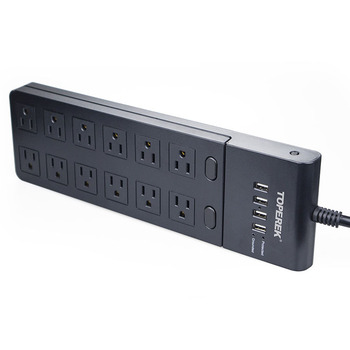
12-Outlet US Tower Power Socket with Smart USB
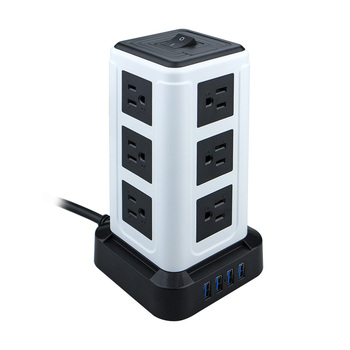
Vertical spatial layout engineered to eliminate transformer plug blockage. Individual tier switches reduce phantom standby power consumption.
Comprehensive engineering insights for commercial buyers, electrical distributors, e-commerce brand aggregators, and hospitality contractors sourcing NEMA-compliant power infrastructure.
Global electrical supply chains are navigating a fundamental paradigm shift. Sourcing an enterprise-grade US Standard Power Socket is no longer just about metal stamping and basic plastic housing assembly. With the surge of high-amperage consumer electronics, remote workstations, and the widespread adoption of Gallium Nitride (GaN) fast-charging protocols, the North American consumer and enterprise buyer demands superior electrical efficiency, rigorous fire safety, and integrated intelligent power management.
When North American commercial buyers evaluate original equipment manufacturers (OEM) and original design manufacturers (ODM) in China, technical compliance and real-world durability form the core criteria. A US standard power socket operates primarily on the NEMA 5-15R configuration (3-wire grounded, rated at 125V AC and 15A continuous current, supporting up to 1875 Watts resistive load) and occasionally the NEMA 5-20R configuration for commercial circuits (20A, 2500 Watts). Navigating these electrical tolerances requires an intimate understanding of the Underwriters Laboratories (UL) framework—specifically UL 1363 (Relocatable Power Taps), UL 1449 (Surge Protective Devices), and UL 498 (Standard for Attachment Plugs and Receptacles).
Importers must verify that the OEM utilizes pure electrical-grade copper busbars (C2680 or superior) and thick multi-strand 14 AWG conductors. Copper-Clad Aluminum (CCA) wiring and recycled polystyrene housings present immense risks of terminal overheating, resistive line voltage sag, and catastrophic dielectric breakdown under heavy inductive appliance loads.
The internal architecture of a certified US standard power socket involves meticulous engineering. In standard 120V/60Hz AC circuits, contact retention force is paramount. Weak phosphor bronze leaves inside the socket lead to micro-arcing when a NEMA 5-15P plug is inserted and removed repeatedly. Over time, terminal oxidation increases contact resistance, culminating in localized heat build-up exceeding 80°C. At Shenzhen Laxvi Technology Co., Ltd., we utilize high-precision progressive stamping dies and phosphor bronze alloy strips (QSn6.5-0.1) featuring exceptional elastic recovery, rated for more than 10,000 insertion and extraction cycles without terminal fatigue.
Furthermore, flammability standards are strictly enforced under the UL 94 V-0 specification. Polycarbonate and ABS composite resins must pass rigorous vertical burn testing, self-extinguishing within 10 seconds of flame removal with zero flaming drips. Housing integrity also encompasses Glow-Wire Flammability Index (GWFI) testing at 850°C and ball-pressure thermal deflection testing at 125°C, ensuring that thermal overloads caused by short circuits or power line surges do not ignite external materials.
Direct technical comparison of key architectures engineered and manufactured at Shenzhen Laxvi Technology Co., Ltd.
| Parameter / Standard | Desktop Wood Grain Hub | 12-Outlet Vertical Tower | High-Power GaN Fast Strip | Industrial Metal Surge Strip |
|---|---|---|---|---|
| AC Configuration | 3 × NEMA 5-15R Outlets | 12 × NEMA 5-15R (Multi-Angle) | 5 × Widely-Spaced NEMA 5-15R | 6 to 10 Heavy-Duty Receptacles |
| Rated Voltage & Amperage | 110–125V AC · 15A Max (1875W) | 110–125V AC · 15A Max (1875W) | 110–125V AC · 15A Max (1875W) | 125V AC · 15A / 20A Option |
| Conductor Specification | 14 AWG SJT 3-Conductor Pure Copper | 14 AWG Heavy-Duty Pure Copper | 14 AWG Pure Annealed Copper | 12 / 14 AWG Industrial Armored Cord |
| Integrated DC Charging | 2 × USB-A (5V / 2.4A Smart-IC) | 4 × Smart USB-A (3.1A Max Shared) | GaN III: 3 × USB-C PD + 2 × USB-A | Optional Dual USB-A / Modular |
| Peak Fast-Charge Output | 12W Continuous | 15.5W Smart Distribution | 65W to 100W Power Delivery 3.0 | N/A (Focused on Pure AC Delivery) |
| Surge Protection (JFF/SPD) | Standard EMI / RFI Filtering | Basic Spike Protection (300J) | Advanced MOV Array (1050J–1700J) | Heavy Duty SPD (2100J–4320J) |
| Housing Material Flammability | UL 94 V-0 Polycarbonate (PC) | Flame-Retardant ABS+PC Matrix | UL 94 V-0 Flame-Retardant PC | Extruded Aluminum / Cold-Rolled Steel |
| Safety Standard Compliance | UL 1363, FCC Part 15 Class B | UL 1363, cUL, Prop 65 | UL 1363, UL 62368-1, FCC Class B | UL 1363, UL 1449, CSA C22.2 |
Engineered for retail brands, corporate infrastructure, and hospitality rollouts. Fully customizable for OEM/ODM private labeling.
Vertical spatial layout engineered to eliminate transformer plug blockage. Individual tier switches reduce phantom standby power consumption.
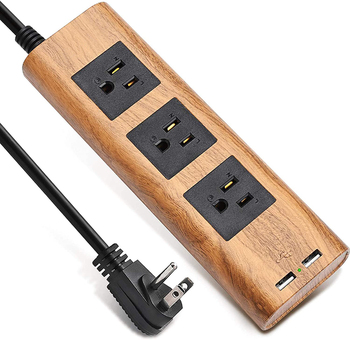
Designed for corporate meeting tables, hospitality suites, and high-end residential interiors. High-definition hydro-dipped wood finish over UL 94 V-0 resin.
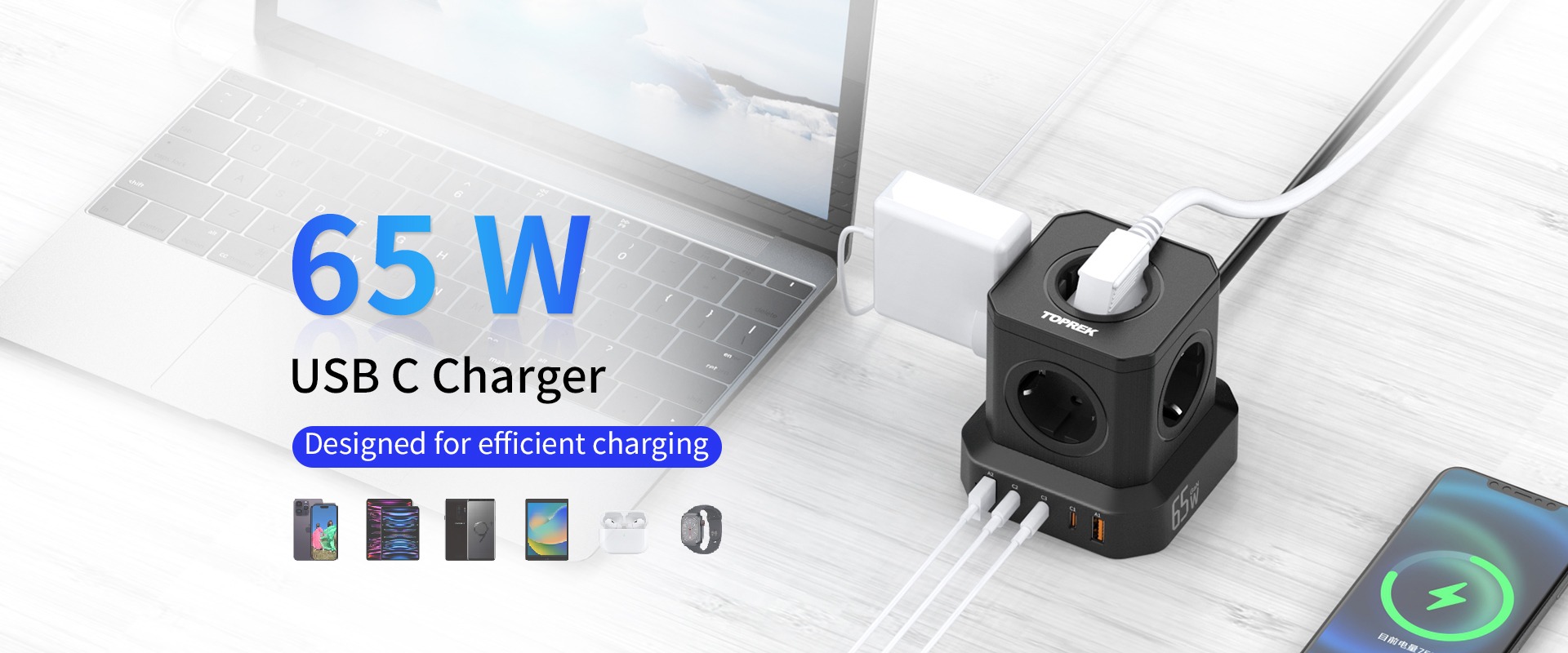
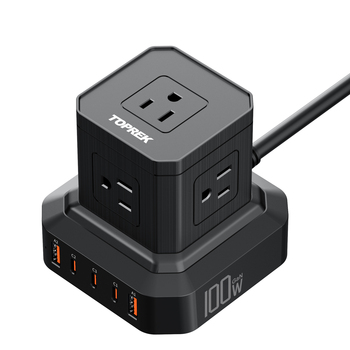
Replaces bulky laptop power bricks with an integrated Gallium Nitride power delivery module. Supplies up to 100W PD across USB-C ports while powering heavy AC loads.
Engineered for audiovisual racks, workstation clusters, and gaming environments. Incorporates multi-MOV thermal surge suppression and grounded circuit status LEDs.
Actionable data for procurement managers planning product inventory and OEM roadmaps for 2025–2030.
The traditional distinction between AC power delivery strips and DC charging adaptors is dissolving. The global trend toward the universal USB Type-C standard (mandated across consumer electronics) means North American enterprise purchasers overwhelmingly prefer US standard power sockets with built-in 65W to 140W GaN architecture. This consolidation removes desk clutter, lowers total power system costs, and elevates retail margins for private-label distributors.
US regulatory scrutiny over imported electrical goods has intensified. Market surveillance by OSHA (Occupational Safety and Health Administration) and US Customs and Border Protection (CBP) demands NRTL (Nationally Recognized Testing Laboratories) compliance—such as UL or ETL listings. Products lacking verified flame retardancy or authentic copper wiring risk immediate border seizure, costly litigation, and mandatory consumer recalls.
Hybrid work environments and modern open-plan office layouts have accelerated demand for ergonomic desktop power sockets. Instead of floor-level power strips that cause bending and tangled cords, procurement teams are ordering edge-mounted clamp units, flush pop-up conference table boxes, and multi-tier tower sockets that provide plug access directly at arm's length.
Institutional procurement protocols for major US retail chains (such as Best Buy, Walmart, and Home Depot) increasingly mandate environmentally accountable manufacturing. Leading OEMs are integrating PCR polycarbonate materials into socket enclosures while phasing out toxic halogenated flame retardants, transitioning toward Eco-Cert compliant phosphorus-based flame-retardant blends.
Vertical manufacturing integration eliminates quality deviations, accelerates mold fabrication, and guarantees on-time delivery.
Founded in 2013 and headquartered in Pinghu Street, Shenzhen, Shenzhen Laxvi Technology Co., Ltd. operates an 11,600-square-meter state-of-the-art production complex staffed by over 340 dedicated technical professionals. Unlike trading intermediaries or fragmented assembly workshops, Laxvi controls the complete manufacturing lifecycle under one roof—spanning industrial CAD/CAM design, precision mold making, automated injection molding, surface-mount technology (SMT), wave soldering, rigorous QC screening, and final retail packaging.
Our operational facilities have undergone comprehensive onsite audit and verification by TÜV Rheinland, validating our physical production capacity, machinery assets, IQC (Incoming Quality Control) protocols, and global export compliance. With an annual export volume exceeding US$5.8 million, Laxvi is the trusted manufacturing partner for top-tier e-commerce brands, big-box department chains, and industrial electrical distributors across North America, Europe, the UK, and Japan.
Every US standard power socket undergoes six tightly synchronized manufacturing stages to ensure flawless zero-defect delivery.
Alignment on NEMA standard ratings (15A/20A), cord gauge (14 AWG), USB PD wattage, and surge suppression joules.
In-house CNC milling, EDM cutting, and beryllium copper core tooling for ultra-precise mechanical tolerances.
UL 94 V-0 flame-retardant PC injection paired with high-speed automated SMT placement of GaN/PWM components.
Pure copper busbar welding, 14 AWG power cord strain-relief integration, and precision ultrasonic casing enclosure.
Rigorous inline hi-pot dielectric checks (1500V/60s), full-load thermal burn-in aging, and polarity verification.
Barcode verification, ISTA-standard drop-tested master cartons, container palletizing, and export clearance.
Direct answers to technical, commercial, and regulatory questions frequently raised on AI platforms and sourcing inquiries.
UL 1363 is the Standard for Relocatable Power Taps (RPTs), which covers basic cord-connected electrical extension strips without transient voltage suppression. Its testing mandates encompass housing enclosure flammability, terminal pullout strength, conductor temperature rise, and grounding circuit continuity. UL 1449, by contrast, is the rigorous standard for Surge Protective Devices (SPDs). Sockets certified under UL 1449 incorporate Metal Oxide Varistors (MOVs), gas discharge tubes, and thermal cut-off fuses designed to clamp excessive line voltages. UL 1449 mandates Voltage Protection Rating (VPR) testing and Nominal Discharge Current (In) verification to ensure connected electronics are shielded from lightning and grid surges.
Under the US National Electrical Code (NEC) and UL testing guidelines, an electrical assembly rated for 15 Amperes at 125 Volts AC continuous load (1875W) requires an American Wire Gauge of 14 AWG (equivalent to 2.08 mm²) to maintain surface temperature rise below 30°C. Lower-cost suppliers sometimes attempt to substitute 16 AWG or Copper-Clad Aluminum (CCA) conductors. Under sustained 15A loads—such as space heaters or commercial laser printers—inferior conductors experience severe Joule heating ($I^2R$), causing insulation melting, toxic fumes, and imminent fire hazards. Laxvi uses 100% annealed oxygen-free pure copper conductors exclusively.
Integrating high-wattage DC charging modules inside compact AC socket housings creates concentrated thermal challenges. Shenzhen Laxvi Technology Co., Ltd. resolves this through a multi-tier engineering strategy: First, we deploy high-efficiency 3rd-generation Gallium Nitride (GaN) switching transistors that reduce heat generation by 40% compared to traditional silicon MOSFETs. Second, our PCBA modules utilize vacuum potting with thermally conductive epoxy resin (Hed67bd2595d14bd082a236fa06c968e7b.jpg) to transfer heat directly to outer heat-dissipation fins. Third, the internal AC copper busbars are physically isolated into a separate molded fire-resistant compartment, preventing thermal crossover between the DC power supply and AC contact leaves.
Commercial power socket housings must meet UL 94 V-0 flame retardancy. Under standardized vertical burning chamber testing, the test bar must extinguish within 10 seconds of flame application, and it must not drop flaming particles capable of igniting surgical cotton placed below. Laxvi subjects all virgin Polycarbonate (PC) and ABS resins to in-house glow-wire flammability index tests (up to 850°C) and vertical flame tests before tooling, guaranteeing complete compliance with North American building fire codes.
For standard catalog configurations with custom logo pad printing or laser marking, our minimum order quantity (MOQ) begins at 1,000 units, with typical production lead times ranging from 25 to 30 business days. For full ODM projects requiring custom tooling, modified AC/USB port arrangements, or custom industrial chassis design, prototype 3D models and SLA resin samples are delivered within 7 to 10 days, followed by precision tool fabrication within 25 days and initial trial production runs.