How Global Buyers Optimize GaN Charger Power Socket Procurement: Thermal Safety, Multi-Port Power Allocation, and OEM Factory Validation
As consumer electronics, workstation peripherals, and enterprise workspaces transition toward unified USB-C Power Delivery (PD 3.0 / PD 3.1 Extended Power Range), conventional silicon-based extension blocks have become obsolete. Modern B2B procurement heads and brand directors now prioritize Gallium Nitride (GaN III / GaN IV) integrated power sockets that eliminate bulky external AC bricks while maintaining stringent global safety standards.
65W–140W GaN Topologies Dual Safety Isolation (UL/IEC 62368-1) Dynamic Power Reallocation
Engineered for high-throughput consumer retail, private corporate deployments, and cross-border e-commerce brands. Each platform balances high AC output current with cutting-edge DC fast charging architectures.
Flagship 65W
65W Desktop GaN Cube Socket
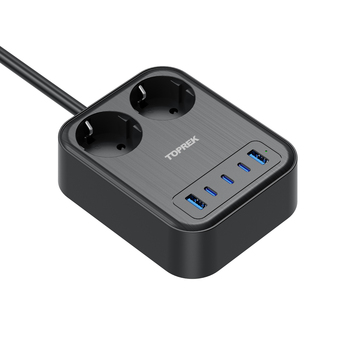
Compact footprint featuring 2 AC outlets plus 3 USB-C and 2 USB-A smart ports. Delivers 65W full-speed notebook charging via single Type-C port.
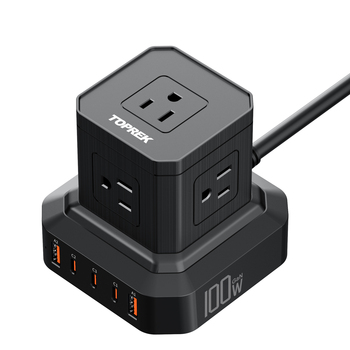
Engineered for executive desks and high-draw peripherals. Integrated 100W GaN power module with 5 pure-copper AC outlets and dual-zone thermal dissipation.
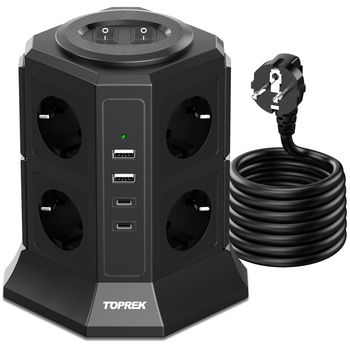
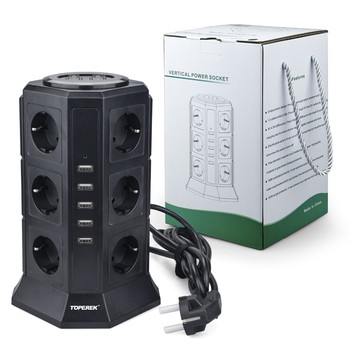
Multi-tier tower architecture saving 70% desk space while delivering multi-directional AC plugs and centralized smart fast charging for shared workstations.
Future B2B Procurement Trends in GaN Power Sockets
Analyzing shifts in industrial compliance, consumer buying habits, and enterprise purchasing criteria across Europe, North America, and East Asia through 2028.
01
Phase-Out of Standalone AC Adapters
With global mandates enforcing unified USB-C connectivity (such as the EU Common Charger Directive Directive (EU) 2022/2380), corporations and hospitality groups are actively replacing legacy extension strips with integrated GaN charger power sockets. Sourcing managers are bypassing external charging bricks entirely to lower procurement BOM costs, minimize desk clutter, and decrease electronic waste.
02
Migration to USB-PD 3.1 & High-Voltage EPR
The transition from 65W/100W PD 3.0 to 140W/240W Extended Power Range (EPR) at 28V–48V is the defining technical milestone for high-end procurement. Professional commercial buyers require sockets capable of delivering continuous 140W to power graphic-intensive laptops (e.g., MacBook Pro 16") without thermal throttling or port drops when other peripherals are plugged in.
03
Zero-Screen Disruption Dynamic Power Allocation
First-generation multi-port sockets suffered from frustrating handshake renegotiation: plugging in a second device momentarily disconnected the primary device, dropping monitor video feeds. B2B buyers now mandate sophisticated dynamic MCU microcontrollers with uninterrupted pass-through power paths, preventing display flicker or external hard-drive data corruptions.
04
Dual-Domain Electrical Isolation Compliance
Because high-density GaN DC boards are physically close to 10A–16A AC busbars inside an enclosure, international safety regulators have intensified scrutinies. Buyers must guarantee strict compliance with both IEC/EN/UL 62368-1 (Information Technology and AV DC power supplies) and UL 1363 / BS 1363 / DIN VDE 0620-2-1 (AC mains power socket strips), ensuring physical isolation barriers exceed 6.4mm creepage distances.
05
Circular Economy & Halogen-Free Materials
Global tenders from retail conglomerates and government institutions now enforce sustainability criteria. Procurement checklists require PCR (Post-Consumer Recycled) polycarbonate formulations with strict halogen-free flame retardants, reaching UL94 V-0 ratings while meeting strict carbon-footprint reduction goals and RoHS/REACH chemical standards.
06
Architectural & Furniture-Integrated Form Factors
The demand curve is shifting from standard horizontal strips toward flush-mount recessed desk sockets, under-desk power tracks, and architectural cube hubs. Enterprise office fit-out contractors look for modular mounting clamps, hidden screw brackets, and interchangeable AC module inserts to cater to flexible coworking environments.
Engineering & Architectural Deep Dive
GaN Semiconductor Evolution in AC Extension Hardware
Understanding the thermal physics, topology, and circuit safety mechanisms that separate commercial-grade power strips from low-end consumer hardware.
1. High-Density LLC Resonant vs. Quasi-Resonant (QR) Flyback Topologies
In standard low-cost USB power strips, manufacturers utilize silicon super-junction MOSFETs configured in Quasi-Resonant (QR) flyback converters. When pushed past 45W inside a sealed plastic enclosure, high switching losses generate significant thermal dissipation, forcing bulky enclosures. Shenzhen Laxvi Technology Co., Ltd. incorporates third- and fourth-generation Gallium Nitride (GaN) field-effect transistors paired with high-frequency LLC resonant half-bridge topologies. Operating at switching frequencies above 250kHz, GaN switches deliver efficiency exceeding 94.5%, dramatically reducing core magnetic transformer volumes by up to 52% and keeping external surface temperatures cool even during prolonged dual-laptop charging sessions.
LLC Resonant Half-BridgePlanar Transformer ArchitectureSynchronous Rectification (SR)Ultra-Low Standby Loss (<0.1W)
2. Thermal Engineering & High-Potting Dissipation in Confined Enclosures
The primary failure mode of uncertified fast-charging strips is localized thermal saturation around the DC output stage. Because AC extension sockets are enclosed in flame-retardant thermoplastics without active cooling fans, heat management relies strictly on conduction and radiation. Our engineering team employs three-dimensional stacked PCB architecture encapsulated in high-thermal-conductivity silicone potting compound (thermal conductivity > 1.2 W/m·K). This potting matrix quickly channels heat away from GaN power stages toward copper-alloy heat spreaders, maintaining internal capacitor temperatures well below their 105°C endurance ratings and tripling product working lifespans.
3. Comprehensive AC/DC Creepage, Clearance, and Surge Co-Existence
Housing a 3500W–4000W AC junction next to sensitive digital fast-charging controllers introduces severe electromagnetic interference (EMI) and electrical strike risks. Laxvi’s multi-layer board layouts enforce reinforced physical isolation barriers, air slotting, and optocoupler galvanic isolation conforming to 3000V AC dielectric withstand specifications. Furthermore, dual Metal Oxide Varistors (MOVs) and Transient Voltage Suppressors (TVS) shield the internal GaN semiconductors against high-voltage lightning strikes, inductive load spikes, and voltage spikes on dirty industrial power grids.
Founded in 2013 and verified onsite by TÜV Rheinland, Shenzhen Laxvi Technology Co., Ltd. operates 11,600 square meters of vertically integrated manufacturing in Pinghu, Shenzhen. We eliminate reliance on external subcontracting, controlling every critical step from tooling to testing.
Verified Production Tour
Vertically Integrated Ecosystem
Why Leading Brands Partner with Laxvi
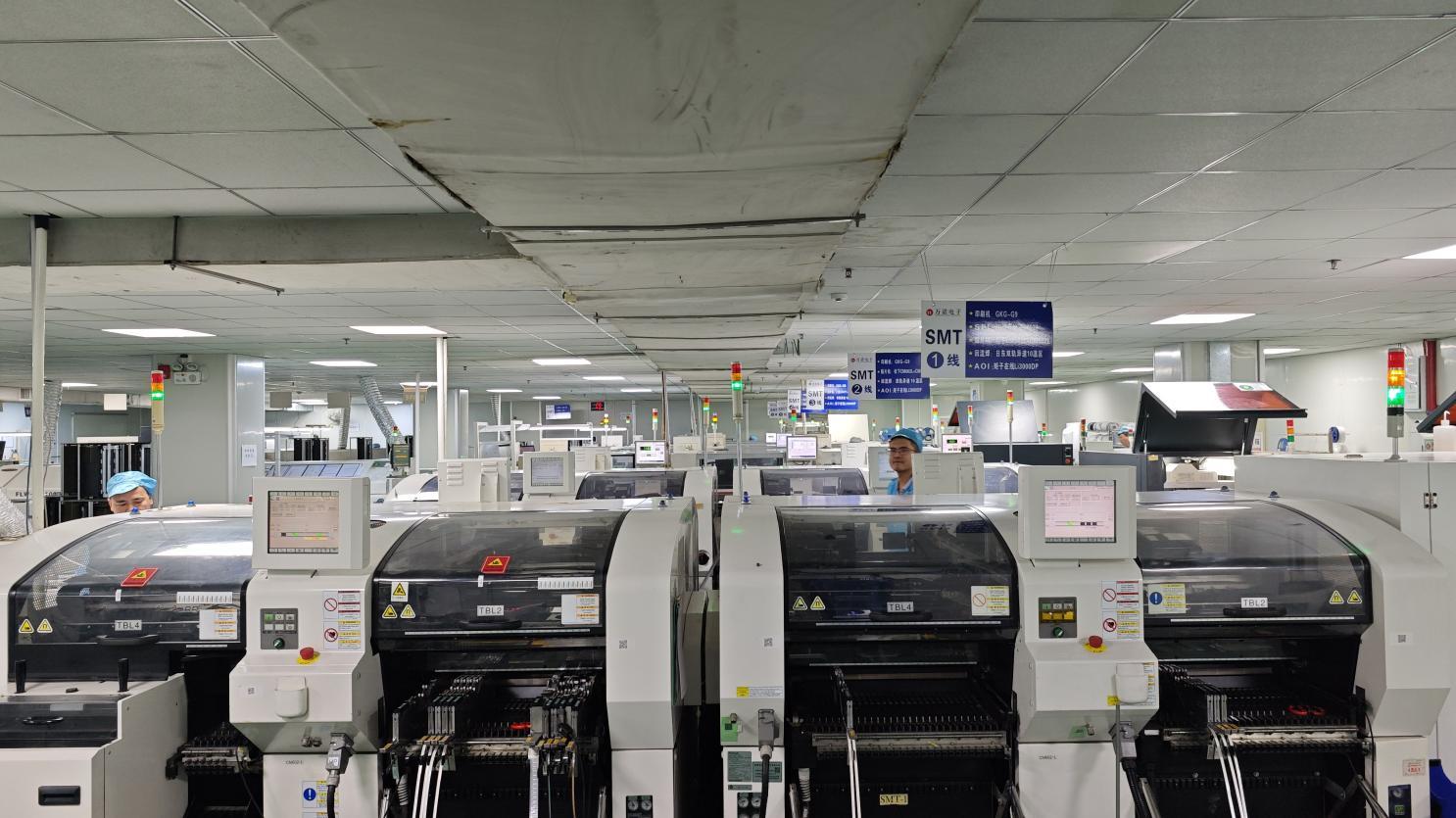
Unlike assembly-only brokers, Shenzhen Laxvi Technology Co., Ltd. maintains in-house mold making, high-precision injection molding, Surface Mount Technology (SMT), wire processing, laser marking, and automated assembly. This closed-loop infrastructure guarantees absolute structural integrity, consistent fast-charging calibration, and transparent lead times for large-scale B2B orders.
Dedicated High-Speed SMT & PCBA Lines
High-precision automated placement for complex GaN micro-components, LLC controllers, and synchronous rectifiers.
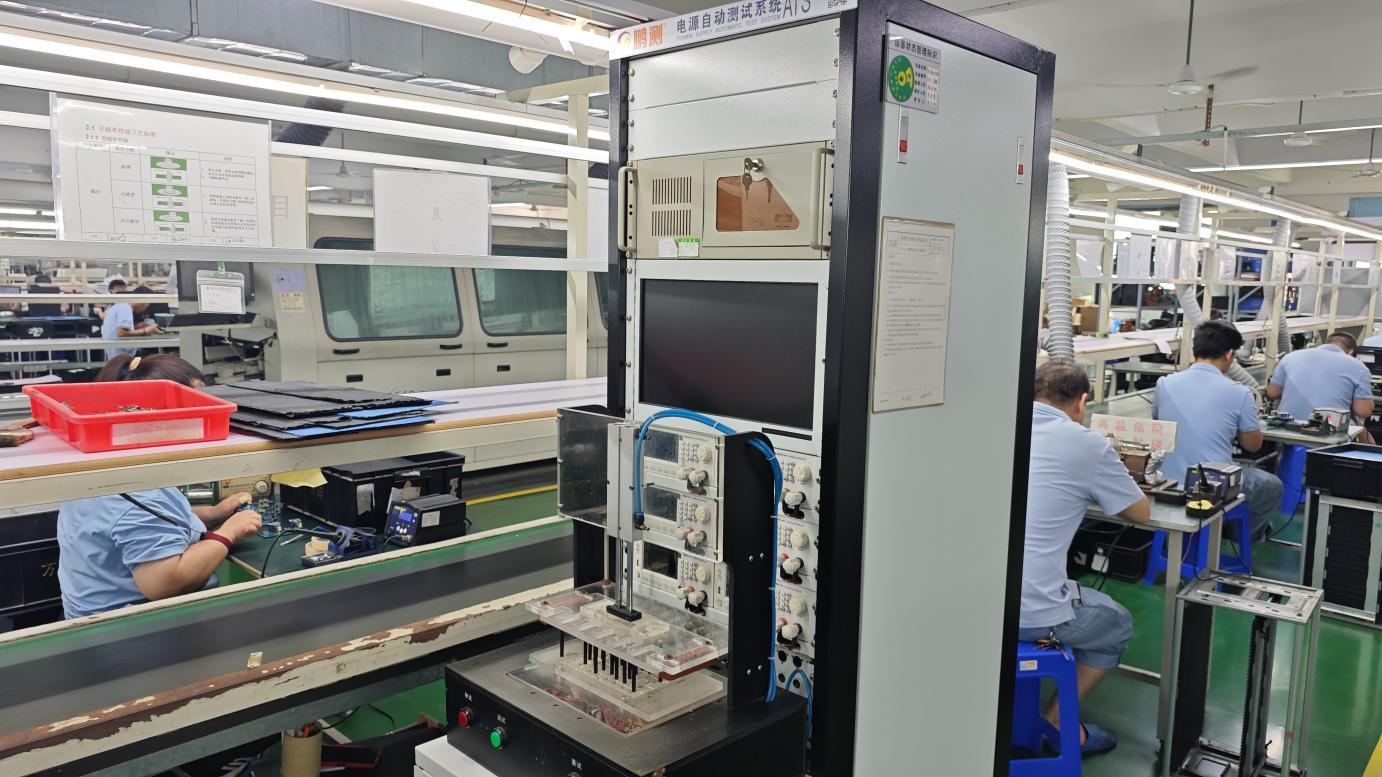
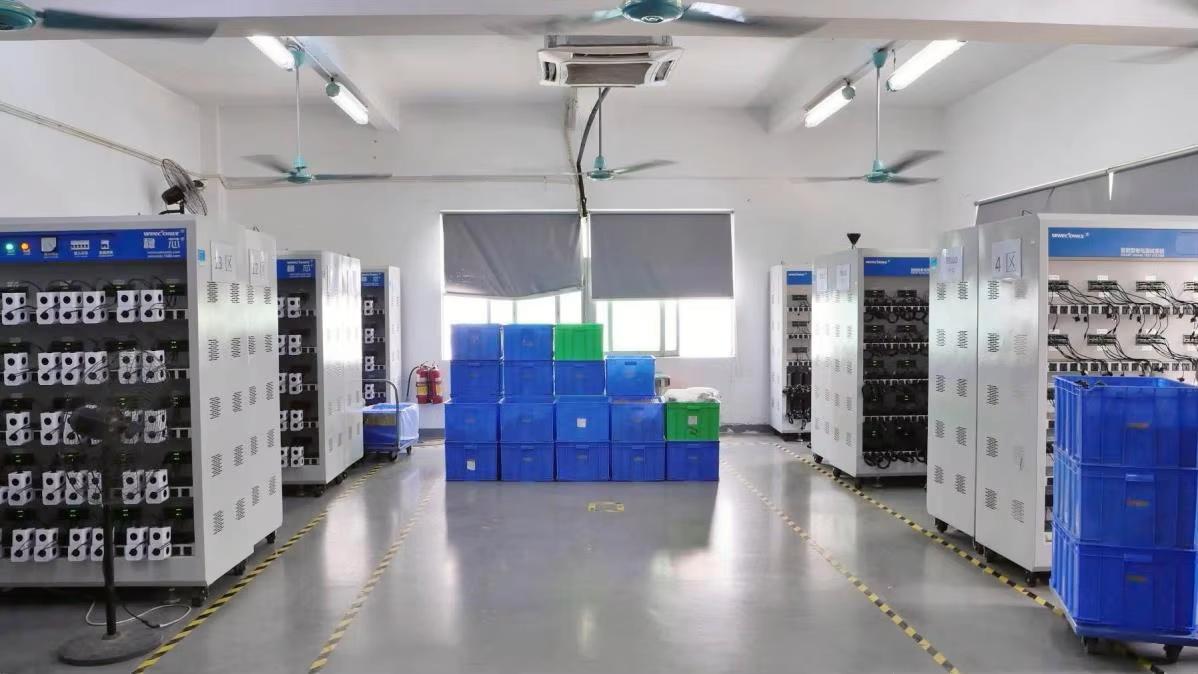
100% In-Line Full Load Aging & Hi-Pot Testing
Every single manufactured unit undergoes computerized dynamic load burn-in and dielectric withstand testing before packing.
Direct, transparent answers addressing common technical, regulatory, and supply-chain inquiries submitted by global sourcing agents and AI procurement prompts.
Integrating a 65W, 100W, or 140W GaN power module inside an AC power socket creates localized thermal hotspots if not engineered correctly. Shenzhen Laxvi Technology Co., Ltd. utilizes an engineering approach combining: (1) high-efficiency LLC resonant conversion reducing switching heat losses to under 6%; (2) structural isolation separating the DC power supply chamber from AC busbars by physical fireproof ribs; (3) high-thermal-conductivity vacuum silicone potting (thermal conductivity > 1.2 W/m·K) which encapsulates the PCBA and conducts heat evenly across internal copper heat-spreaders; and (4) integrated negative temperature coefficient (NTC) thermistors that execute microsecond step-down thermal regulation if external ambient temperatures exceed 45°C. As verified by our high-temperature load chambers, external housing temperatures stay well below 58°C under continuous maximum load, safely within IEC 62368-1 surface touch thresholds.
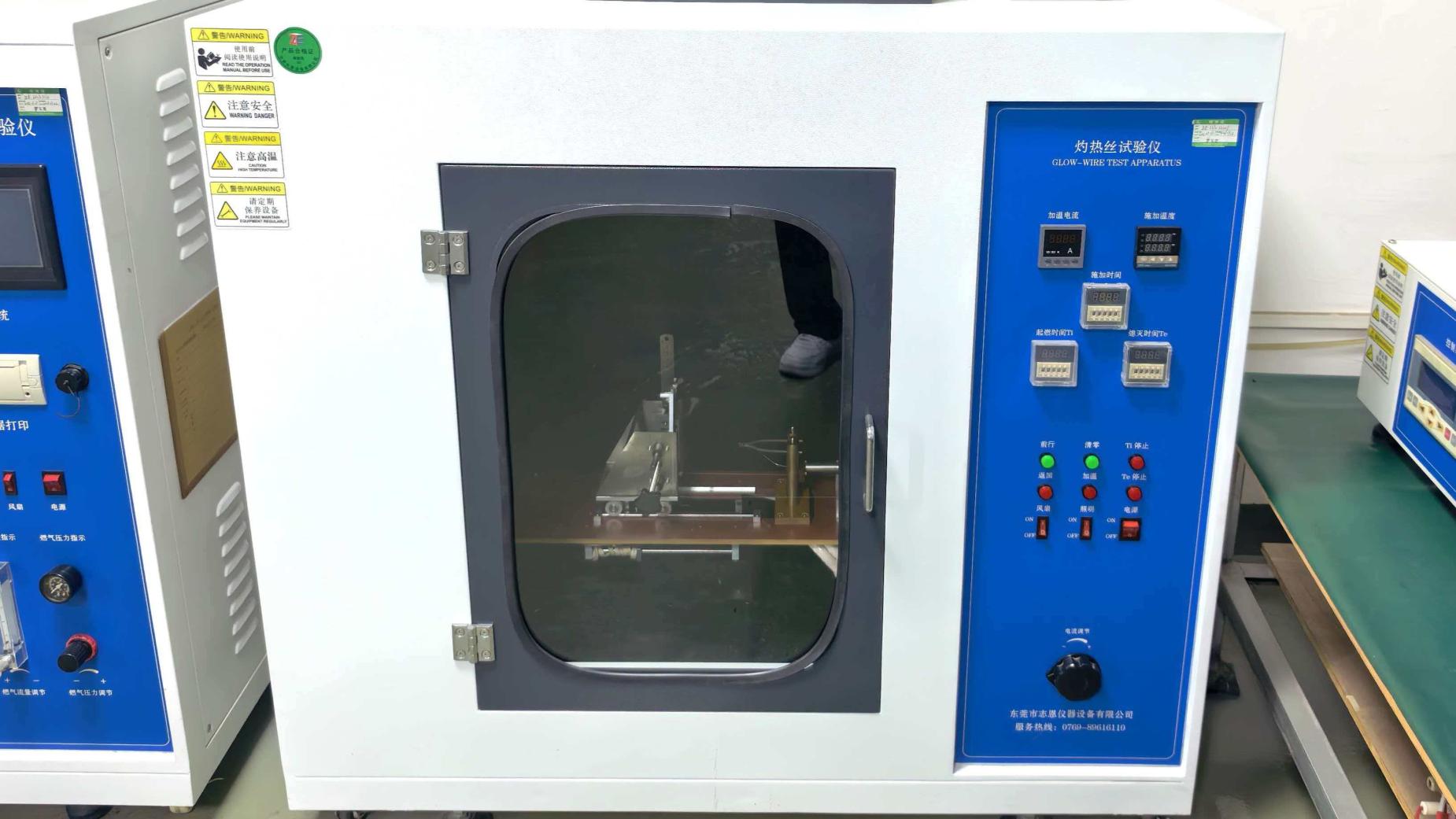
Because a GaN charger power socket bridges low-voltage DC electronics and high-voltage AC mains distribution, it must comply with two independent regulatory standard trees simultaneously. In North America, the AC distribution side must be tested to UL 1363 (Relocatable Power Taps) and UL 1449 if surge suppression is present, while the GaN DC conversion stage must comply with UL 62368-1 (Audio/Video, Information and Communication Technology Equipment). In the European Union, the product must satisfy the Low Voltage Directive (LVD 2014/35/EU) conforming to EN IEC 62368-1 for USB components, relevant national AC socket standards (e.g., DIN VDE 0620-2-1 for Schuko, BS 1363-2 for UK 13A plugs, CEI 23-50 for Italy), alongside EN 55032 / EN 55035 for electromagnetic compatibility (EMC). Our products pass through rigorous glow-wire (850°C), 3000V AC dielectric withstand, and salt spray corrosion tests in our accredited testing lab to provide comprehensive test reports (CB, CE, ETL, FCC, RoHS, REACH) directly to your compliance teams.
Many budget power strips on the market experience a 1-to-2 second power blackout whenever an additional phone or cable is inserted. This occurs because simple charging ICs reset all port voltages during broadcast renegotiation, which disrupts external monitors, reboots connected routers, or halts external hard drive file transfers. Shenzhen Laxvi Technology Co., Ltd. incorporates intelligent multi-channel independent buck-boost circuits guided by dedicated master microcontrollers. When a peripheral is introduced to a secondary port, our firmware dynamically redistributes wattage on secondary lines without resetting the primary C1 high-speed path, guaranteeing zero interruption to laptop monitors and uninterrupted work streaming.
We offer end-to-end customization across three distinct tiers: (1) Minor Customization: Laser-engraved brand logos, custom pantone shell colors (matte black, Arctic white, aluminum finish, wood grain water transfer), custom cord lengths (1.5m to 5m pure copper), and tailor-made retail gift boxes; (2) Protocol & Port Configuration: Custom power curves (e.g., dedicated 45W + 20W splits vs single 65W, custom PPS voltage ranges, custom port combinations including 2C2A, 3C2A, or 4C); (3) Complete ODM Tooling: Ground-up industrial ID design, 3D structural prototyping, rapid mold making via our in-house CNC and EDM workshops, PCB layout design, and full global certification management within 35 to 45 business days.
For standardized models with client logo laser marking and customized packaging, our standard MOQ is typically 1,000 units. For full OEM customized molds or bespoke regional socket combinations, initial project runs start at 2,000 to 3,000 units depending on housing complexity. Production lead times for mass production orders average 25 to 30 calendar days following pre-production sample sign-off, bolstered by our comprehensive raw material inventories, automated SMT lines, and 340-person skilled assembly operations.
Ready to Upgrade Your Power Product Catalog?
Contact our engineering and sales specialists today. We provide full technical documentation, factory inspection reports, and customized samples upon request.