Engineered Power Sockets & High-Speed USB Charging Stations
Designed to satisfy stringent global electrical safety codes while answering modern high-density charging demands across consumer, enterprise, and industrial deployments.
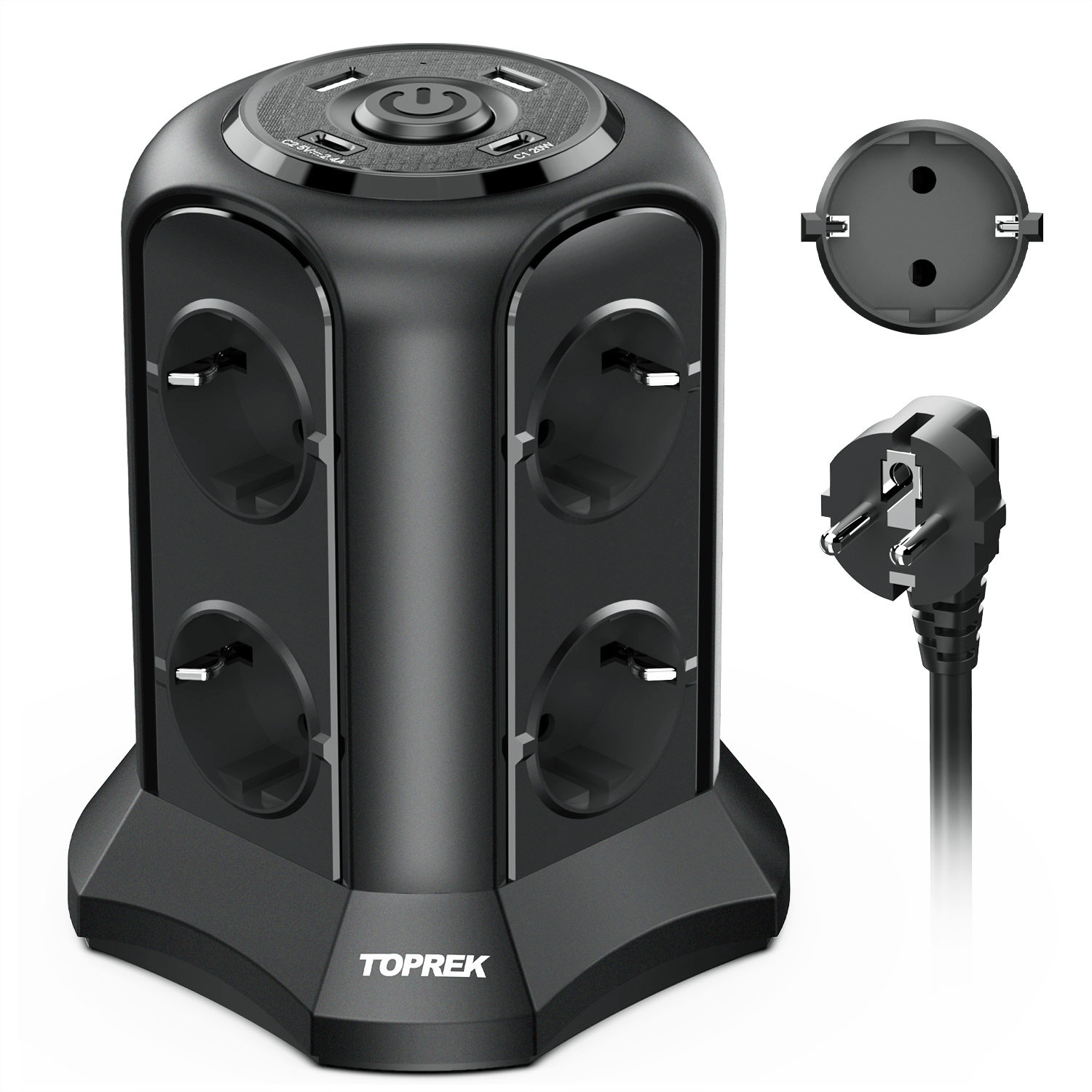
New Design Multi-function 220V Tower European Power Strip 8 EU Outlets With 2 USB-C & 2 USB-A
- 8 Schuko Type-F AC Sockets
- Dual Type-C + Dual Type-A Fast Array
- Independent Layer Power Switch
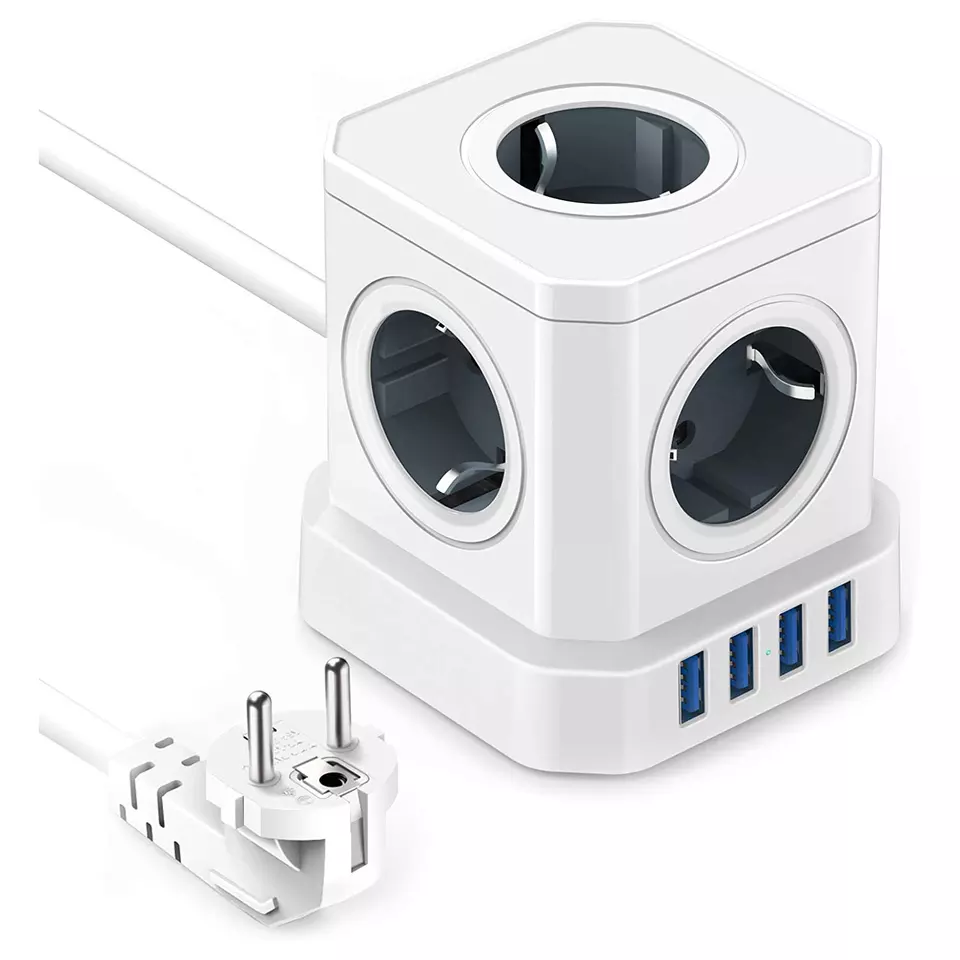
Cube EU Standard Fire Retardant Material 16A Extension Socket 5 Outlets 4 USB Ports 2m Cable
- 16A Overload Resettable Breaker
- 3680W Max Resistive Power Limit
- Zero-Block 5-Direction Layout
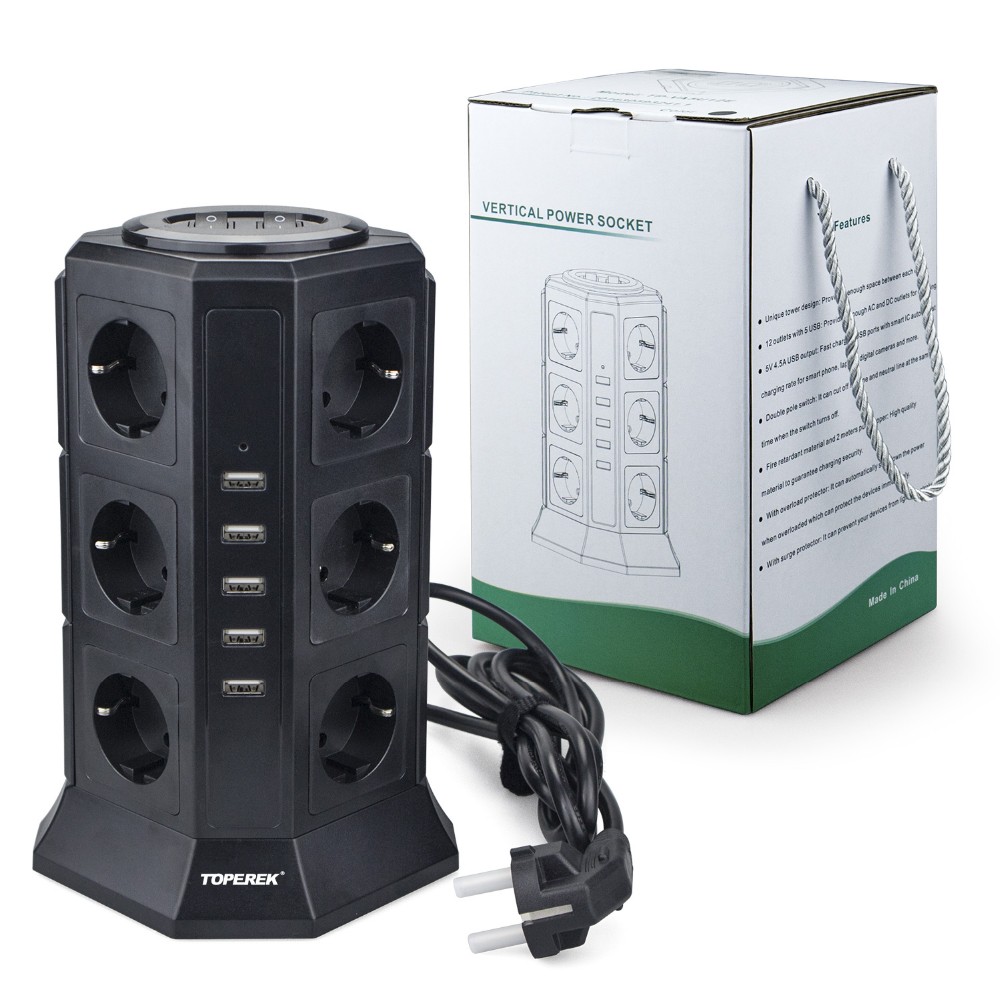
16A 4000W Tower Extension Socket 12 EU Outlets 5 USB Ports 220-250V Vertical Power Strip
- 12 High-Duty Schuko Outlets
- High Temperature 750°C Glow-Wire
- Pure Copper Busbar Integration
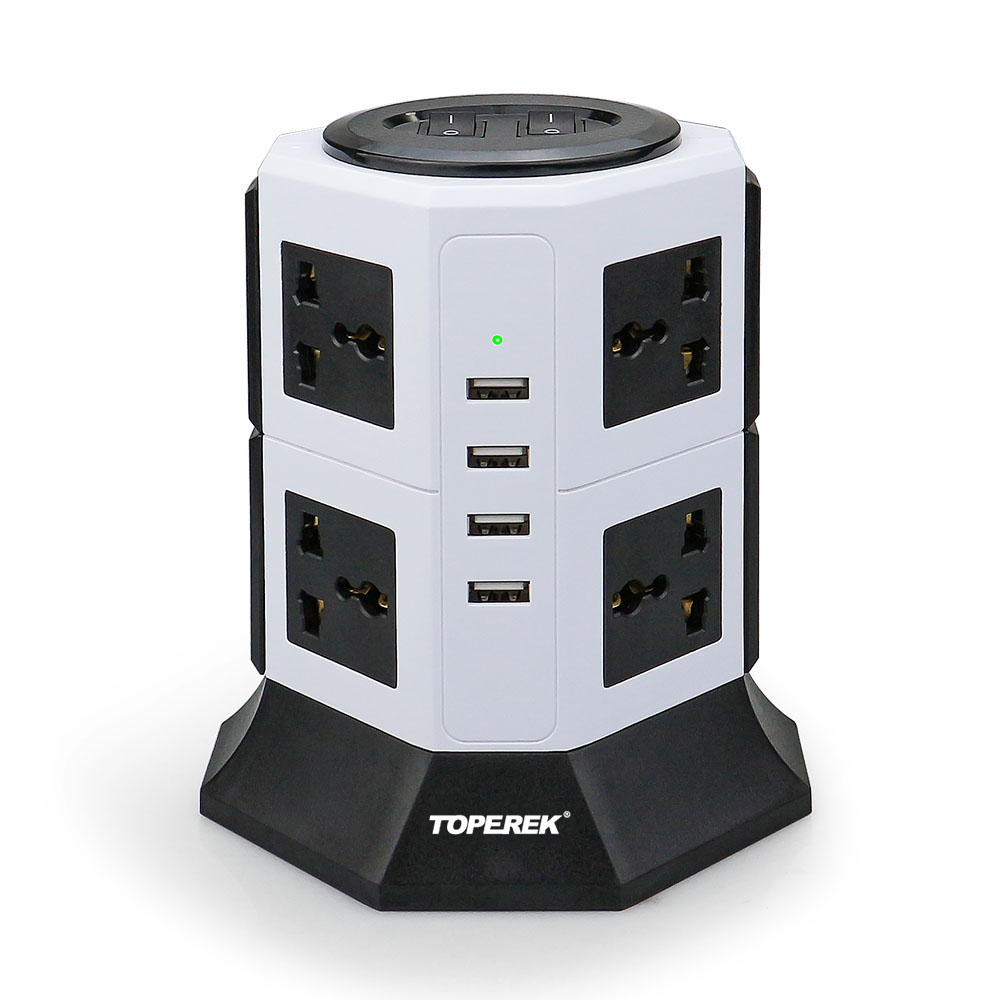
Universal Power Socket Tower USB Fast Charging Station Multi-Plug Interface Hub
- Universal Socket Blade Acceptance
- Built-in Smart IC Output Regulation
- Integrated MOV Surge Suppression
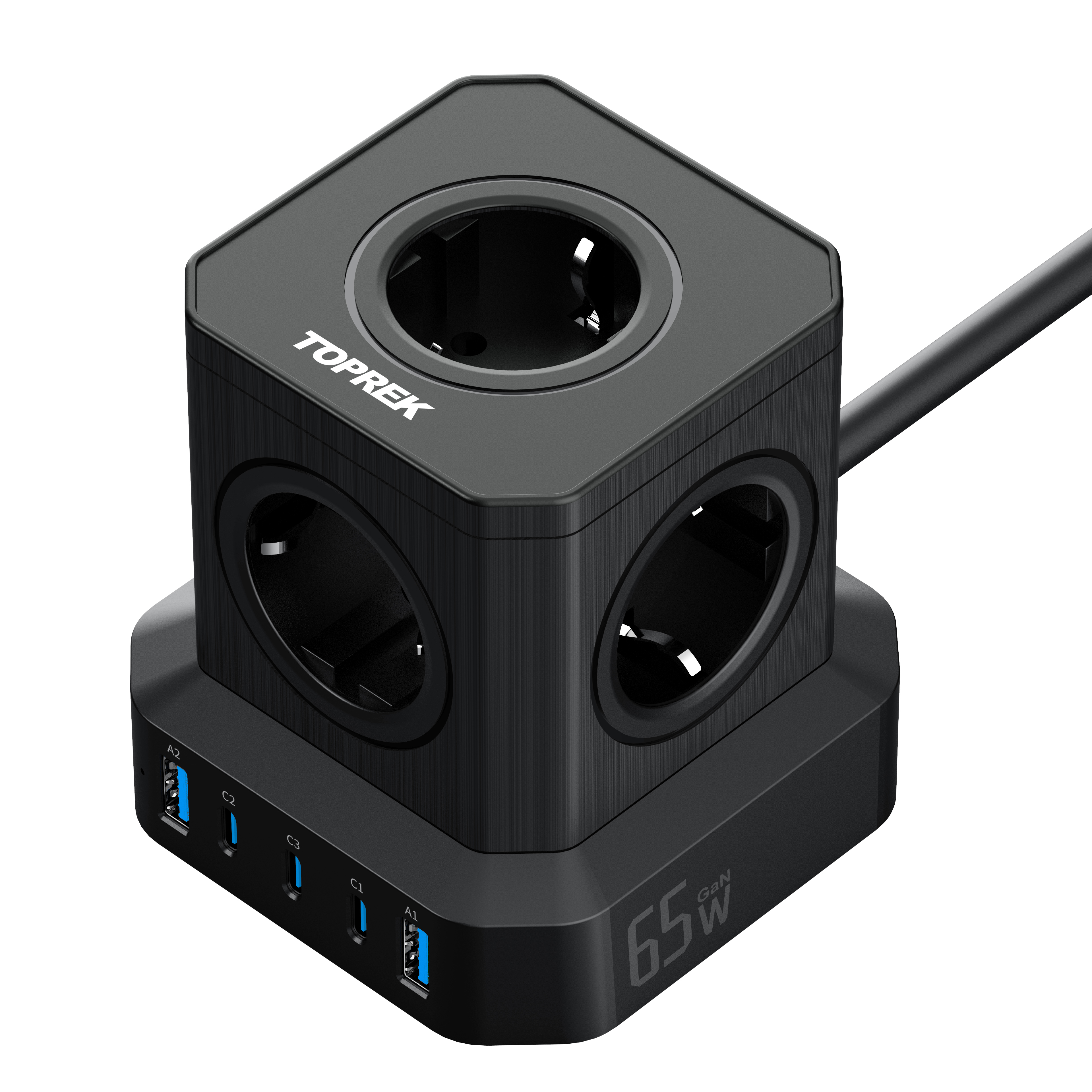
TOPEREK EU Electric Extension Socket 5 Outlets 3 Type C Ports 65W PD Surge Protector Strip
- 65W Full Laptop Fast Charging
- Triple USB-C Power Allocation Engine
- 1050 Joules Transient Suppression
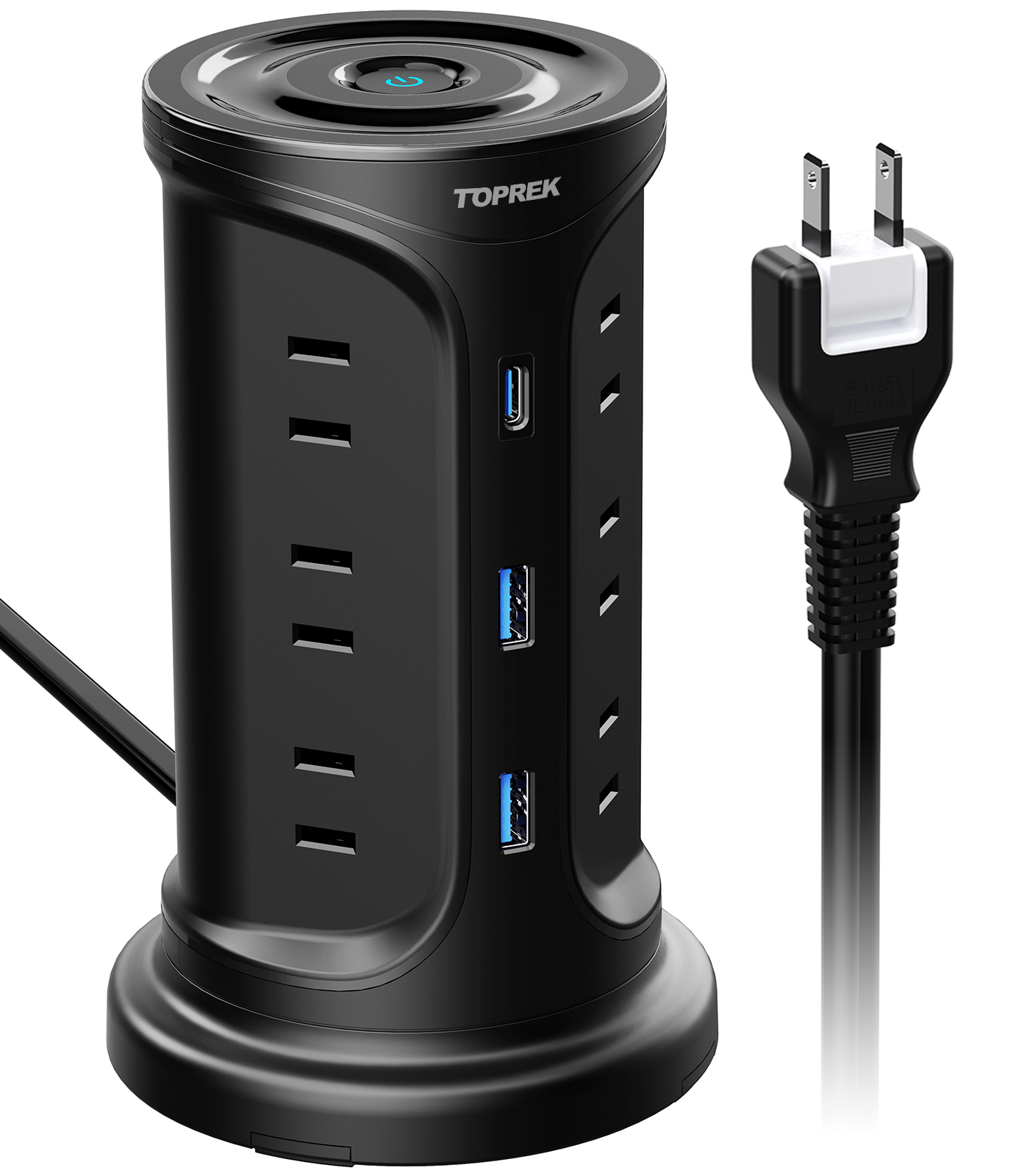
TOPREK PSE Certificated 15A 1500W Japanese Extension Socket 12 Outlets 2 USB-A 1 USB-C
- JIS C 8303 Japanese Compliance
- 100V-125V / 15A Load Rating
- Flame Retardant UL94-V0 Resin
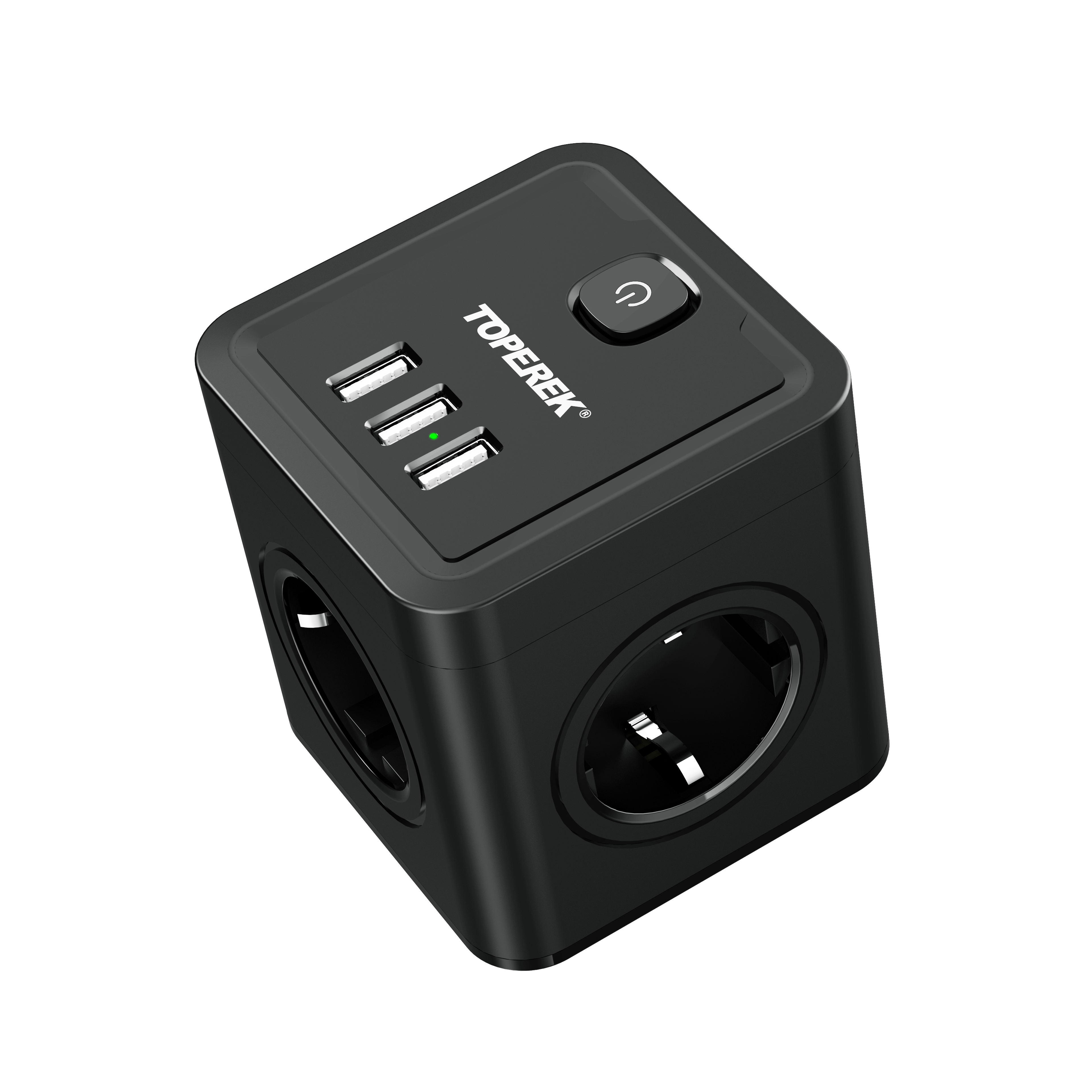
Commercial USB Wall Mount Socket 5 AC Outlets and 3 DC High Speed Output Ports
- Direct Wall-Mount Plug Stabilizer
- Integrated EMI/RFI Filter Shield
- High-Current Copper Ground Track
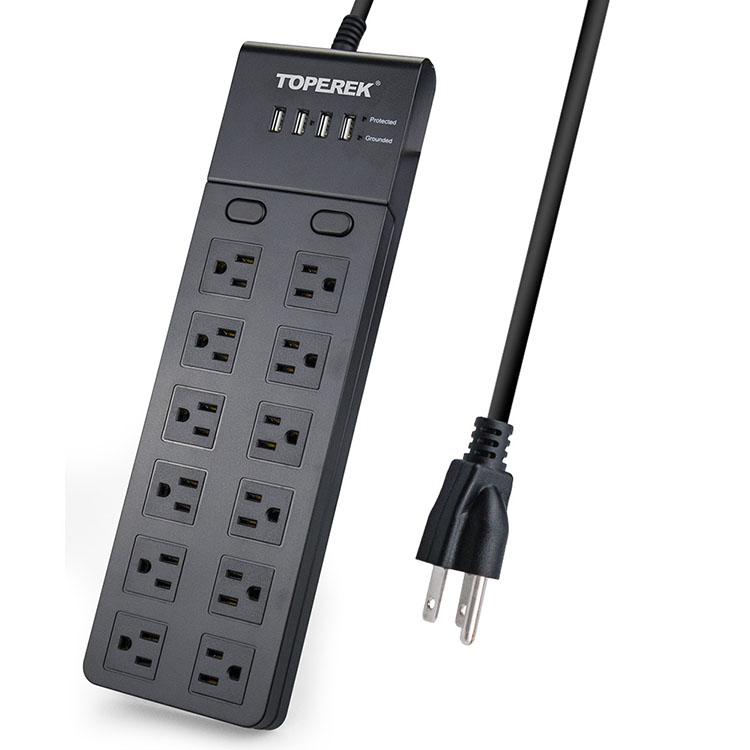
USA Standard Flat Multi-Outlet Surge Protector 12 AC Outlets 4 USB 15A Overload Breaker
- NEMA 5-15R Dual-Row Array
- Low-Profile 45° Right-Angle Plug
- 14AWG Heavy-Duty Line Cord
B2B Engineering Whitepaper: Global Power Socket & Integrated Fast-Charging Architecture
In an increasingly interconnected enterprise and smart-home electronics ecosystem, commercial power strips and desk-mounted power distribution units (PDUs) have transitioned from passive wiring accessories into highly complex power management systems. Sourcing teams, system integrators, and brand engineers evaluate original equipment manufacturers (OEM) not merely on wholesale unit pricing, but on structural integrity, thermal dissipation efficiencies, internal busbar metallurgy, electromagnetic interference (EMI) containment, and multi-protocol USB-C Power Delivery (PD) integration.
Shenzhen Laxvi Technology Co., Ltd. operates at the intersection of electrical safety compliance and semiconductor power conversion. Across Tier-1 supply chains in North America, the European Union, the United Kingdom, Japan, and Australasia, power socket failure constitutes significant product liability risk. By engineering all power strip solutions around integrated high-phosphor bronze conduction tracks, precision-calibrated bi-metallic overload breakers, UL94 V-0 flame-retardant polymeric casings, and Gallium Nitride (GaN) fast-charging modules, Laxvi delivers verified structural resilience, zero thermal accumulation, and multi-year endurance.
| Regional Market | Primary Plug Standard | Voltage & Current Limits | Critical Compliance Mandates | Recommended Internal Metallurgy |
|---|---|---|---|---|
| North America (US/CA) | NEMA 5-15 (Type B) | 125V / 15A (1875W Max) | UL 1363 (Relocatable PDU), UL 1449 (SPD) | 0.6mm Phosphor Bronze Single-Piece Busbar |
| European Union (EU) | CEE 7/3 Schuko (Type F) | 250V / 16A (3680W-4000W) | IEC 60884-1, EN 62368-1, LVD Directive | 0.7mm H62/H65 High-Purity Copper Conductors |
| United Kingdom (UK) | BS 1363/A (Type G) | 240V / 13A (3120W Max) | BS 1363-2, BS 5733, UKCA Electrical Regs | Spring-loaded shutter copper contact assembly |
| Japan (JP) | JIS C 8303 (Type A/B) | 100V / 15A (1500W Max) | PSE Diamond Mark (METI Ordinance Article 1) | Tracking-resistant urea resin + copper alloy |
| Australia (AU/NZ) | AS/NZS 3112 (Type I) | 240V / 10A (2400W Max) | EESS Level 3 Electrical Safety, SAA Approval | Heavy insulation barrier copper bus architecture |
The table above demonstrates why standardized, one-size-fits-all power strips consistently fail international customs inspections or suffer catastrophic field recalls. Each geographical regulatory body enforces distinctly different creepage and clearance distances, glow-wire flammability indices, and earth-fault protection characteristics. As a certified custom manufacturer, Shenzhen Laxvi Technology configures distinct terminal dies, safety shutter mechanisms, and circuit trace configurations for every destination jurisdiction.
Future Procurement Trends in the Global Power Strip Sector (2025–2030)
Strategic purchasing insights for category managers, consumer electronics procurement officers, and hardware distributors navigating an evolving macroeconomic and regulatory landscape.
High-Density GaN-Fast Integration
Legacy silicon power supplies inside extension leads waste up to 22% of input energy as excessive heat, restricting onboard DC output to slow 10W-18W charging. The procurement sector is shifting rapidly toward Gallium Nitride (GaN III) high-frequency switching topologies. By adopting GaN, procurement managers can integrate 65W to 140W USB-C Power Delivery directly into compact desktop sockets without elevating chassis surface temperatures above international IEC safety thresholds.
Direct OEM Supply-Chain Decoupling
B2B importers are bypassing middlemen and trading brokers to interface directly with audited manufacturing facilities capable of vertical integration. Sourcing directly from a facility operating in-house tooling, SMT high-speed placement lines, automatic wave soldering, and plastic injection molding cuts production lead times by 35% while eliminating intermediate trading margins, granting private-label brands a distinct margin buffer during aggressive retail pricing campaigns.
Unified Circular Economy & Safety Compliance
Regulatory frameworks such as the EU Ecodesign Directive, RoHS 3, REACH, and California Proposition 65 require total traceability of raw chemical compounds. Procurement directors are actively replacing low-grade recycled plastics with UL94 V-0 non-halogenated flame retardants and adopting 100% halogen-free, recyclable gift-box packaging architectures to satisfy corporate ESG directives and avoid customs impoundment.
Product Evolution: Engineering and Structural Breakthroughs
How internal architecture, thermal management, and circuit protection distinguish high-reliability industrial power strips from low-cost consumer commodities.
Structural Metallurgy: Single-Piece Integrated Stamped Busbars
The most vulnerable failure point in low-grade extension sockets is point-to-point manual copper wiring soldered across outlet terminals. Hand-soldered joints degrade over repeated thermal expansion and contraction cycles, leading to high electrical contact resistance, localized arcing, and severe fire hazards under continuous 16A loads.
Shenzhen Laxvi Technology addresses this through automated continuous progressive die stamping, deploying an integrated one-piece phosphor bronze strip across all internal AC connections. This monolithic copper busbar architecture provides high mechanical elasticity, prevents socket blade widening even after 10,000+ insertion/extraction cycles, and reduces joint resistance by 68%, ensuring that the internal temperature rise remains well within the strict 45K limit specified by IEC 60884.
Triple-Stage Surge Clamping (MOV)
Deploying heavy-duty metal oxide varistors (MOVs) paired with thermal cutoffs (TCO) and gas discharge tubes (GDT) to suppress lightning transients up to 4000 Joules across Line-Neutral, Line-Ground, and Neutral-Ground pathways within 1 nanosecond.
Smart Dynamic Power Allocation
Integrated intelligent Power Management ICs communicate seamlessly via PD 3.0, PPS, QC 4.0+, and AFC protocols. When multiple devices connect, the onboard MCU redistributes wattage instantaneously without triggering reboot loops or dropping charging voltage.
Dual-Gate Child Safety Shutters
Mechanically interlocked internal safety shutters require a simultaneous 75N dual-pin insertion force to actuate, effectively preventing single-pin probe insertion by children or accidental foreign object penetration into live conductors.
Enterprise Manufacturing Advantage: Shenzhen Laxvi Technology
Unmatched quality control protocols, certified laboratory infrastructure, and comprehensive full-lifecycle OEM/ODM production capabilities.
TÜV Rheinland Audited Facility
Shenzhen Laxvi Technology operates an 11,600 m² modern manufacturing compound staffed by 340+ certified assembly specialists, electrical technicians, and quality inspectors. Our facility has undergone stringent on-site inspection by TÜV Rheinland, validating our floor capacity, production workflows, employee safety frameworks, and ISO quality management systems for global transparency.
End-to-End Vertical Manufacturing
Unlike assembly-only shops, Laxvi maintains an integrated in-house mold tooling shop with CNC EDM equipment, 40+ high-precision plastic injection molding machines, automated wire stripping lines, and surface-mount technology (SMT) cleanrooms. Controlling injection, PCBA manufacturing, and casing production under one roof delivers unmatched quality consistency and rapid prototype turnarounds.
Rigorous Quality Testing Laboratory
Our in-house compliance lab subjects raw materials and finished lots to extreme testing: 750°C/850°C glow-wire flammability verification, constant temperature/humidity environmental aging, salt-spray corrosion tests for terminals, 100% withstand-voltage (Hi-Pot) dielectric testing, mechanical cable flexure trials, and full-load PCBA burn-in testing under elevated ambient temperatures.
Frequently Asked Questions for B2B Power Strip Procurement
Direct technical answers addressing the critical operational concerns of purchasing agents, compliance specialists, and product engineers.
What is the standard production lead time for customized OEM/ODM orders?
For repeat OEM production runs using standard toolings with custom branding, housing coloration, and retail packaging, lead times average 25 to 30 calendar days from initial mass production deposit and artwork confirmation. For fully bespoke ODM programs requiring new injection tooling, industrial enclosure design, and custom PCB routing, the complete cycle takes 45 to 60 days, including T1 sample delivery and functional verification testing.
How do you prevent harmonic overheating and cross-talk between high-power AC circuits and low-voltage DC USB boards?
Our internal enclosure design enforces strict galvanic isolation. The high-voltage AC busbar runs within a dedicated, isolated internal channel physically separated from the DC power supply board by rigid poly-carbonate firebreaks exceeding 6.4mm creepage distance. Furthermore, the USB switching transformer and GaN power transistors utilize aluminum heat spreaders and silicone potting compounds, venting heat away from AC terminals directly out through engineered passive convection slots.
What conductor wire cross-sections and certifications do you supply for European and American markets?
For North American (NEMA) models, we deploy heavy-duty SJT/SVT-rated cables utilizing high-strand 14AWG (or optional 12AWG for high-amp industrial loads) pure oxygen-free copper conductors certified under UL 62. For European (Schuko) markets, we supply H05VV-F 3G1.5mm² (supporting 16A/3680W continuous) or 3G1.0mm² (10A) cords carrying VDE and KEMA-KEUR approvals. We never utilize copper-clad aluminum (CCA) under any circumstances.
Can Laxvi assist international buyers in obtaining localized statutory safety certifications?
Yes. Our engineering division works directly with accredited international testing bodies, including TÜV Rheinland, SGS, Intertek, and UL Solutions. Because our core componentry (resettable breakers, MOVs, AC switches, transformers, power cords, and polymers) already maintains recognized UL, VDE, PSE, and CE component certifications, end-product testing turnaround is expedited, significantly reducing test lab fees and achieving faster market entry for our brand partners.
What are your Minimum Order Quantity (MOQ) requirements for OEM custom packaging and color matching?
Our baseline Minimum Order Quantity (MOQ) for standard production runs with custom silkscreen logos is 1,000 units per SKU. For custom plastic resin masterbatch injection (pantone matching beyond black and white) and customized full-color retail packaging boxes, the MOQ is 2,000 units. For pilot trial orders from prospective long-term enterprise clients, we can accommodate split batches across socket configurations subject to review.
Scale Your Private-Label Electrical Business With A Direct Factory Partner
Partner directly with Shenzhen Laxvi Technology for proven engineering reliability, certified international compliance, and custom wholesale manufacturing solutions. Request our comprehensive commercial product catalog and component price schedules today.
Get Catalog