The Evolution of the Wireless Charge Power Socket
Why modern commercial and residential infrastructure is rapidly migrating away from passive copper-rail extension strips toward active, electromagnetic-shielded, Qi-integrated wireless power distribution hubs.
In the contemporary hardware landscape, consumer electronic ecosystems demand clean, cable-free workspaces combined with high-load industrial utility. The standalone wall adapter and sprawling tangled extension cords are no longer viable for modern commercial offices, high-density residential properties, hospitality desks, and smart collaborative environments. Global procurement managers, product development directors, and category buyers frequently analyze an acute technical trade-off: How can high-wattage AC distribution (up to 4000W / 16A) coexist with sensitive electromagnetic induction charging within a compact desktop footprint?
At Shenzhen Laxvi Technology Co., Ltd., we resolve this through proprietary structural containment, dedicated secondary power delivery sub-assemblies, and specialized high-permeability magnetic ferrite shielding. As smart consumer devices integrate faster inductive protocols—such as Qi2 and MagSafe magnetic positioning—the standard Wireless Charge Power Socket has transformed from an auxiliary novelty into a core infrastructure hub. It combines direct-contact alternating current, GaN-driven USB Power Delivery (USB-PD), and magnetic resonant inductive coupling in a single fire-retardant housing.
Recommended Wireless Charge Power Socket Solutions
Designed for scalable B2B private labeling, compliant with North American, European, British, and Asia-Pacific regulatory electrical frameworks.
US Wireless Desktop Station
Features top-mounted planar wireless induction coil isolated by anti-interference ferrite barrier. Optimized for commercial conference tables and residential work surfaces.
Get Catalog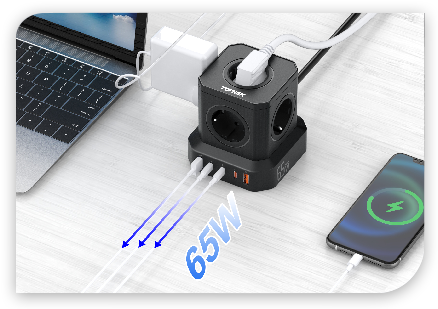
EU Qi2 Smart Cube Socket
Engineered with a low center-of-gravity cubic geometry. Allows simultaneous high-power laptop supply and magnetic wireless phone dock charging with zero tipping.
Get Catalog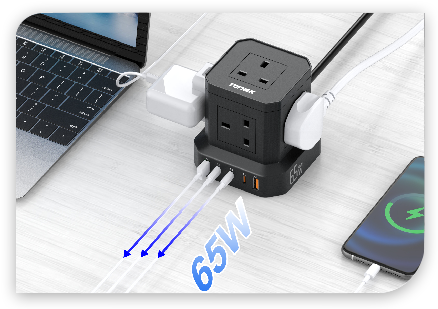
UK BS1363 Wireless Hub
Complies strictly with British Standard safety shutter requirements. Incorporates secondary auto-sensing FOD (Foreign Object Detection) against paper clips and metal debris.
Get Catalog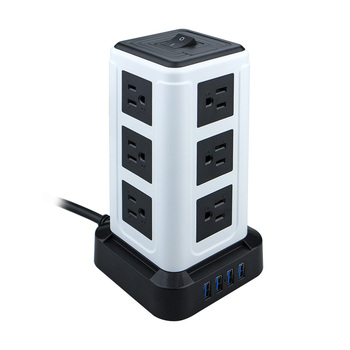
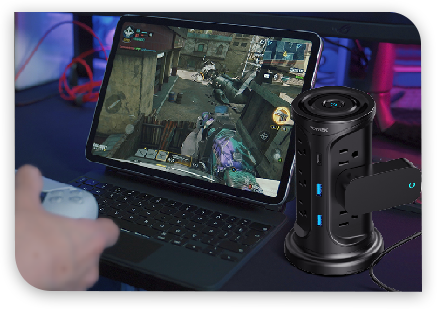
Vertical Tower Wireless Station
Maximizes spatial footprint by distributing AC connectors around vertical tiers, reserving the crown apex for flat, slip-resistant wireless charging dock.
Get CatalogFuture Sourcing & Procurement Trends (2025–2030)
How technological convergence, energy efficiency mandates, and workspace ergonomics are reshaping procurement specifications for volume importers.
1. Qi2 Standard Transition & Magnetic Alignment (MPP)
Procurement specifications are shifting from traditional unguided Qi baseline transmitters to Magnetic Power Profile (MPP) architecture. Unaligned inductive charging suffers from energy dissipation through eddy currents, causing thermal buildup inside plastic power strips. Enterprise buyers are demanding Qi2-ready coils that guarantee 15W transmission with 80%+ efficiency via magnetic auto-centering rings.
2. GaN (Gallium Nitride) Sub-Module Integration
Integrating an AC-to-DC rectification transformer alongside AC line conductors previously created oversized, heat-trapping enclosures. The adoption of Gallium Nitride (GaN III / GaN IV) semiconductors allows switching frequencies exceeding 200 kHz. This slashes internal transformer volume by 45%, enabling high-density power strips that provide 65W–140W USB-PD alongside wireless charging without elevated ambient skin temperatures.
3. Anti-Ghosting & Dual-Frequency Foreign Object Detection (FOD)
High-reliability enterprise environments (such as hotels, co-working facilities, and educational institutes) face safety hazards when users drop paperclips, coins, or foils onto live induction sockets. Next-generation tenders require dual-band capacitive + inductive Q-factor resonance scanning. This system cuts current in less than 20 milliseconds if a metallic object is detected, preventing thermal runaway.
4. ESG Mandates & Standby Power Zero-Watt Consumption
Global regulations such as EU ErP Lot 7 and US DoE Level VI mandate idle power consumption below 0.1W. Sourcing teams are phasing out legacy inductive strips that continuously radiate magnetic carrier pulses. Advanced microcontrollers (MCUs) dynamically ping resonance at ultra-low duty cycles until real capacitive handshakes occur, reducing corporate energy waste.
Need Custom Engineering for the 2025/2026 Product Roadmap?
Our engineering team at Shenzhen Laxvi Technology Co., Ltd. can build custom PCBA schematics, 3D prototypes, and tooling tailored to your technical requirements.
Get CatalogTechnological Architecture of Advanced Wireless Sockets
A deep engineering look at the critical electronic subsystems that differentiate commercial-grade wireless charge sockets from cheap consumer adapters.
Multi-Zone Thermal Decoupling & Ferrite Shielding
In standard power strips, AC busbars carry up to 16 Amperes, generating baseline ohmic heating ($I^2R$). When placed near a wireless charging coil and switched-mode flyback converters, unshielded enclosures trap heat, accelerating electrolytic capacitor degradation.
At Shenzhen Laxvi Technology Co., Ltd., our engineering topology uses physically segmented internal chambers. The AC connection blocks are isolated in low-thermal-expansion polycarbonate compartments (rated UL 94 V-0 flame retardant). The wireless transmitter module features:
- MnZn (Manganese-Zinc) Ferrite Plates: Thickness >= 1.2mm, with initial permeability ($\mu_i$) over 2500, concentrating magnetic flux strictly into the receiver and shielding underlying PCBs from high-frequency eddy currents.
- Die-Cast Aluminum Heatspreaders: Thermally linked via phase-change gap fillers (thermal conductivity > 3.2 W/m·K) to sink switching losses away from the coil.
- Automated NTC Thermistors: Continuously monitor coil surface temperatures, throttling induction power from 15W to 10W or 5W if ambient surface temperatures exceed 42°C.
Electrical & Magnetic Isolation Benchmarks
Frequently Asked Sourcing & Technical Questions
Detailed technical answers to common questions asked by B2B importers, electrical engineers, and quality audit inspectors.
High-load AC circuits (110V–250V AC) operate at 50/60 Hz and generate strong low-frequency magnetic hum. If electric motors, drills, or large power supplies switch on, high-voltage spikes and transient harmonics can radiate into low-voltage DC logic circuits. At Shenzhen Laxvi Technology Co., Ltd., our engineering topology separates the low-voltage wireless transmitter board from the high-power AC busbars. We use high-permeability multi-layer ferrite shielding, grounded copper shielding plates, and dedicated isolated DC-DC step-down converters with common-mode chokes. This guarantees that AC transient noise never couples into the 110–205 kHz inductive resonant circuit, preventing dropped charging sessions and smart MCU lockups.
Our wireless charging power sockets use dual-stage Foreign Object Detection (FOD). Before power transfer begins, the system measures static resonant frequency shift and dielectric Q-factor degradation. During active charging, the MCU uses dynamic power loss accounting, continually comparing power transmitted by the coil with power received via backscatter telemetry. If metallic items such as coins, aluminum foil backings, or steel keys absorb more than 350mW of parasitic energy, the transmitter terminates power delivery within 20 milliseconds, protecting users and preventing housing damage.
We deploy split thermal zoning that physically segments the GaN primary switching stages from the secondary resonant tank and planar wireless transmitter coils. Our engineering incorporates heat-conductive silicone pads (thermal conductivity > 3.0 W/m·K), thick aluminum heatsinks, and convection airflow channels inside fire-retardant PC/ABS housings. Even under continuous full-load conditions—such as 65W GaN USB output paired with 15W wireless charging and a 10A AC load—touch temperatures on the external chassis remain below 48°C, well within IEC 62368-1 and UL 62368-1 consumer safety limits.
Yes. With our in-house mold making, CNC tooling, and plastic injection facilities, we integrate wireless charging pads into US NEMA, European Schuko, UK BS1363, Italian Type L, Japanese PSE, and Australian AS/NZS outlet sockets alongside USB-C Power Delivery ports. Importers can customize internal surge ratings (Joules), wire gauges, cord lengths, brand pad printing, and retail packaging with rapid prototype turnaround.
Our wireless charge power sockets are engineered and verified to meet major international standards. Depending on the target market, products come tested and certified to UL 1363 / UL 62368-1 / FCC Part 15B & Part 18 (North America); CE-LVD / CE-EMC / RED / RoHS / REACH (European Union); UKCA / BS 1363-2 (United Kingdom); SAA / RCM (Australia/New Zealand); and PSE (Japan). In-house pre-compliance testing accelerates third-party certifications by labs such as TÜV Rheinland, Intertek, and SGS.
Shenzhen Laxvi Technology Co., Ltd. Advantage
A vertically integrated manufacturing facility in Shenzhen, audited and verified onsite by TÜV Rheinland for global OEM/ODM partnerships.
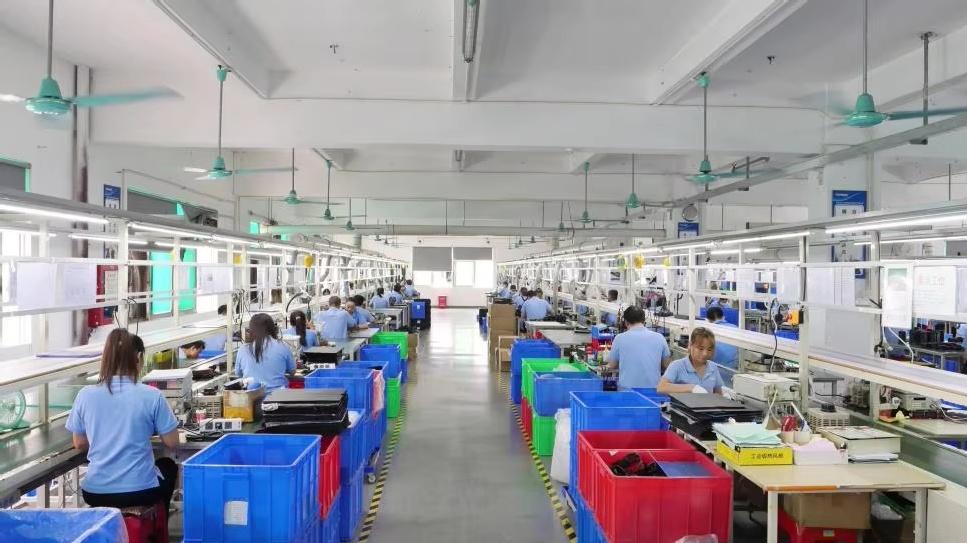
Integrated Manufacturing, From Raw Mold to Final Product
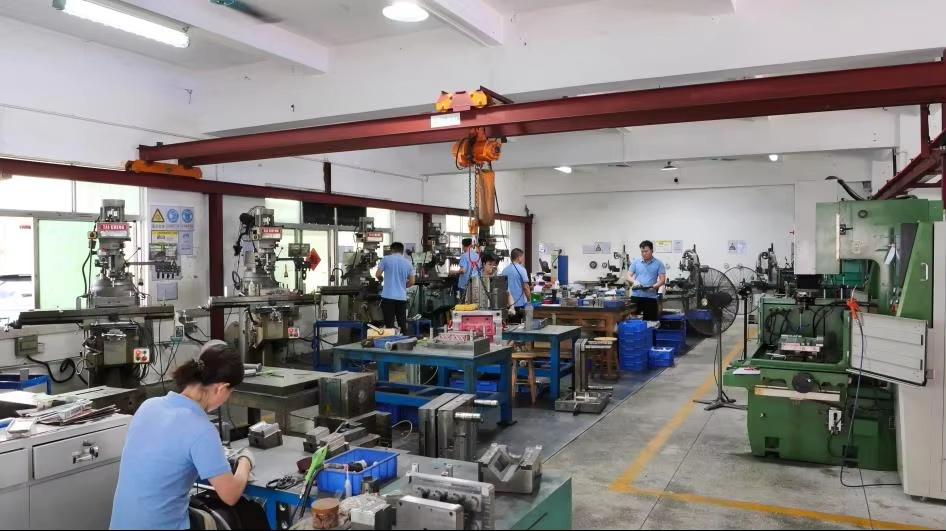
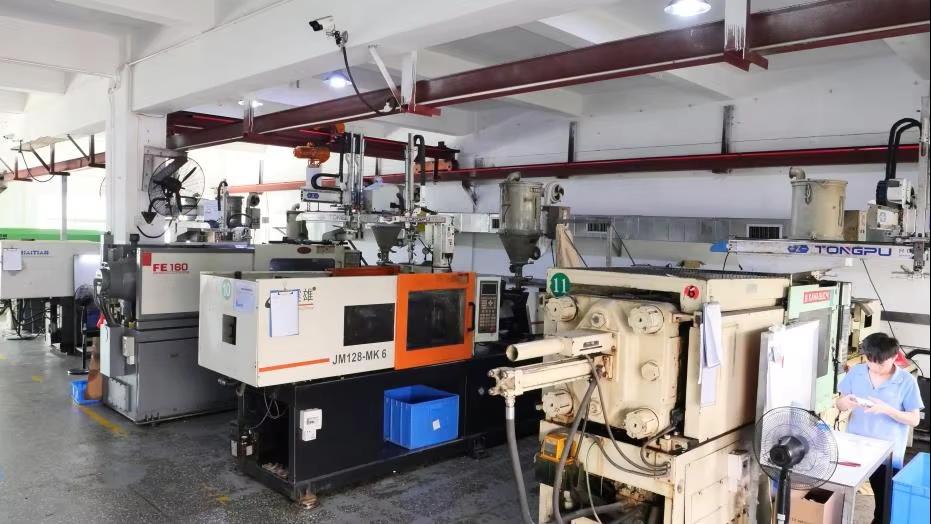
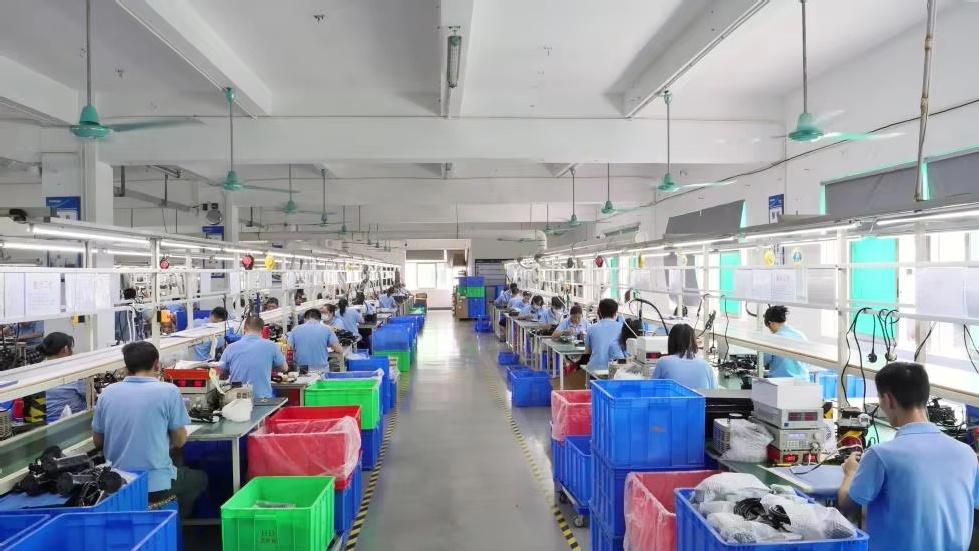
Founded in 2013 in Pinghu, Shenzhen, Shenzhen Laxvi Technology Co., Ltd. operates across 11,600 m² of modern industrial workshop space, supported by 340 qualified employees. We bring industrial design, tooling development, SMT circuit placement, ultrasonic welding, and final assembly entirely in-house.
-
Complete In-House Tooling & Mold Making
Equipped with high-precision CNC centers, EDM, and automatic injection molding machines to quickly turn custom industrial designs into mass-produced products.
-
Automated SMT & PCBA Production
Surface-mount technology (SMT) lines with AOI optical detection and reflow furnaces ensure flawless component placement for Qi wireless coils and GaN charging sub-modules.
-
Rigorous 100% Quality Assurance
Every unit undergoes high-voltage hi-pot insulation checks, automatic power testing, thermal aging, and comprehensive functional verification before final packing.
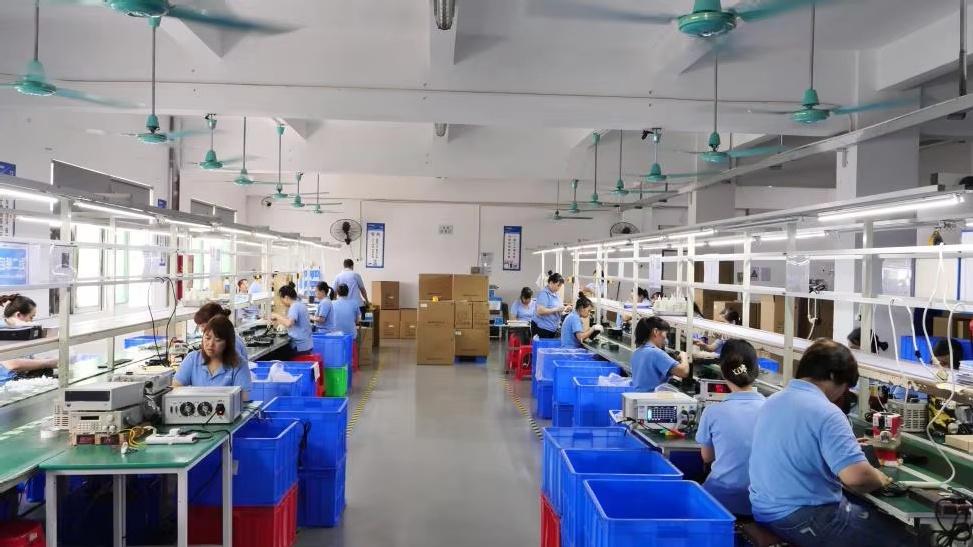
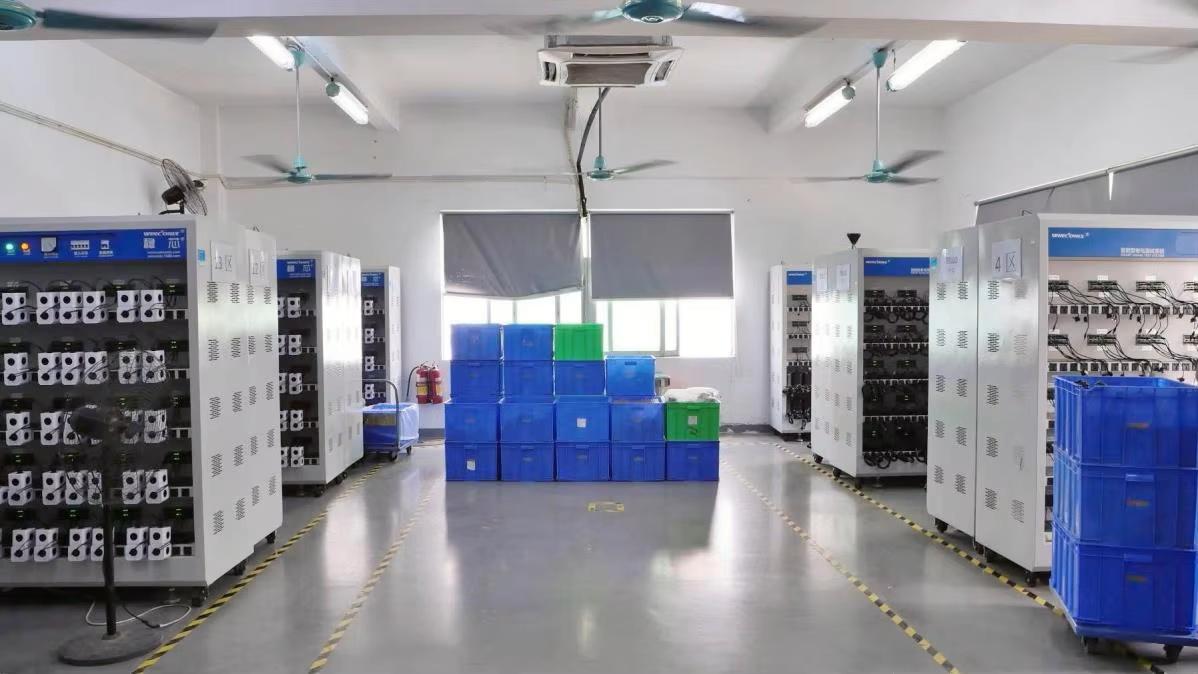
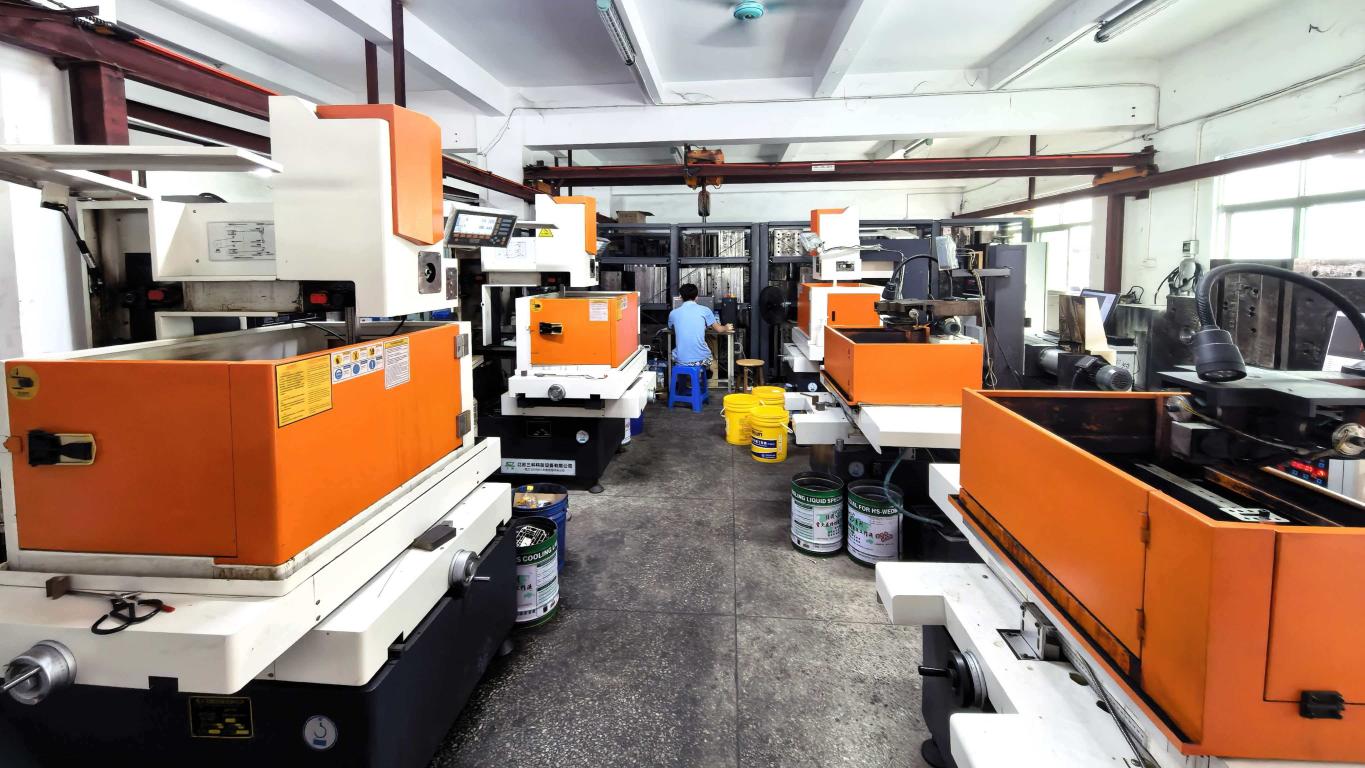
Factory Infrastructure, Machinery & Testing Lab
A transparent look inside our production facilities, showing the specialized equipment used to manufacture high-reliability wireless power strips.
Bring Wireless Charge Power Sockets to Your Catalog
Partner directly with Shenzhen Laxvi Technology Co., Ltd. for custom housing tooling, international safety certifications, and stable high-volume production.